 CalMind
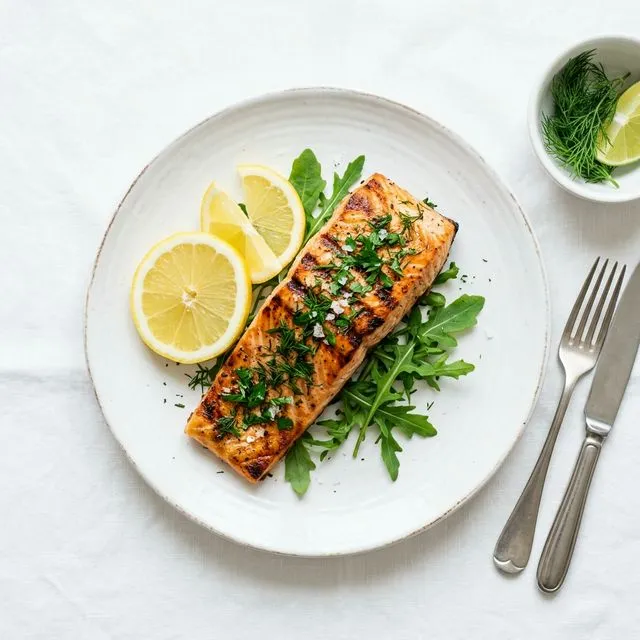
Cooked Atlantic salmon: 206 kcal per 100g
USDA farmed Atlantic salmon, cooked with dry heat
Salmon Preparations: Nutrition Comparison (Per 100g)
Salmon nutrition: calories, protein, and fillet portions
USDA lists farmed Atlantic salmon cooked with dry heat at 206 calories, 22.1g protein, and 12.4g fat per 100g. Use this value only when the species and preparation are a reasonable match; sauces, glaze, oil, skin, and cooking loss can change the result.
What differentiates salmon from terrestrial lean protein sources is its profound omega-3 fatty acid concentration—specifically the essential EPA and DHA variants. These specialized fats actively support cardiovascular health, drastically reduce systemic inflammation across muscle tissue, and improve long-term cognitive brain function. A single 100g serving routinely provides over 2,000mg of functional omega-3s, rapidly exceeding daily medical recommended baselines. Beyond healthy fats, salmon acts as an elite source of Vitamin D (offering 526 IU per 100g), structural Selenium (36mcg), and crucial B Vitamins, particularly vitamin B12, which hits 127% of the Daily Value in one portion.
Farmed Atlantic vs. Wild-Caught Sockeye
USDA records show meaningful species differences: cooked wild Atlantic salmon is about 182 calories per 100g, while cooked sockeye salmon is about 156. These are separate food-composition records, not a rule that applies to every wild or farmed fillet.
While fitness enthusiasts cutting calories often prioritize the leaner wild variants for strict macro management, farmed salmon paradoxically provides higher baseline levels of omega-3s precisely due to its higher fat accumulation. Both variants offer pristine, complete amino-acid profiles that digest with remarkable efficiency. To maintain salmon’s status as a premium lean core protein, bake, grill, or steam the fillets rather than pan-frying them in additional calorie-dense butter or refined industrial seed oils.
The Culinary Versatility Advantage
Because salmon carries intense natural flavors and rich native fats, it requires minimal external caloric additions to taste exceptional. A squirt of fresh acidic lemon juice, cracked black pepper, and fresh dill easily creates a gourmet meal without adding a single dietary calorie. This makes salmon a uniquely powerful tool in volume-eating strategies; the dense protein and heavy fats trigger potent hormonal satiety signals (such as peptide YY and leptin) that keep you feeling physically full for hours following consumption, preventing subsequent snacking urges. CalMind’s photo calorie tracker seamlessly identifies your fresh salmon dishes, providing instant and accurate macros to support your specific dietary goals.
Estimated activity for 206 calories
- Run (Steady Pace): 21 minutes
- Cycle (Moderate Resistance): 28 minutes
- Walk (Brisk Pace): 56 minutes
Frequently Asked Questions
How many calories are in salmon per 100g?
USDA lists cooked farmed Atlantic salmon at 206 calories per 100g, cooked wild Atlantic salmon at 182, and cooked sockeye salmon at 156.
How should I track a salmon fillet?
Match the species and cooking method when possible, weigh the edible portion, and add glaze, oil, or sauce separately.
Sources, U.S. scope, and fact check
Reference items: USDA FoodData Central records for farmed Atlantic, wild Atlantic, and sockeye salmon cooked with dry heat. They report about 206, 182, and 156 kcal per 100g respectively.
- USDA FoodData Central — Farmed Atlantic salmon, cooked
- USDA FoodData Central — Wild Atlantic salmon, cooked
- USDA FoodData Central — Sockeye salmon, cooked
Applicable region: U.S. food-composition reference data. Last fact check: July 24, 2026. Species, wild versus farmed origin, cooking loss, skin, glaze, and oil affect values.
Editorial information
Written and edited by
Editor-in-Chief at CalMind. Leads editorial direction and English-language nutrition content.
Editorial disclosure added July 17, 2026. This page is not labeled as professionally reviewed unless a named reviewer and verifiable credential are shown.