 CalMind
How Accurate is AI Calorie Counting? The Truth Behind the Tech
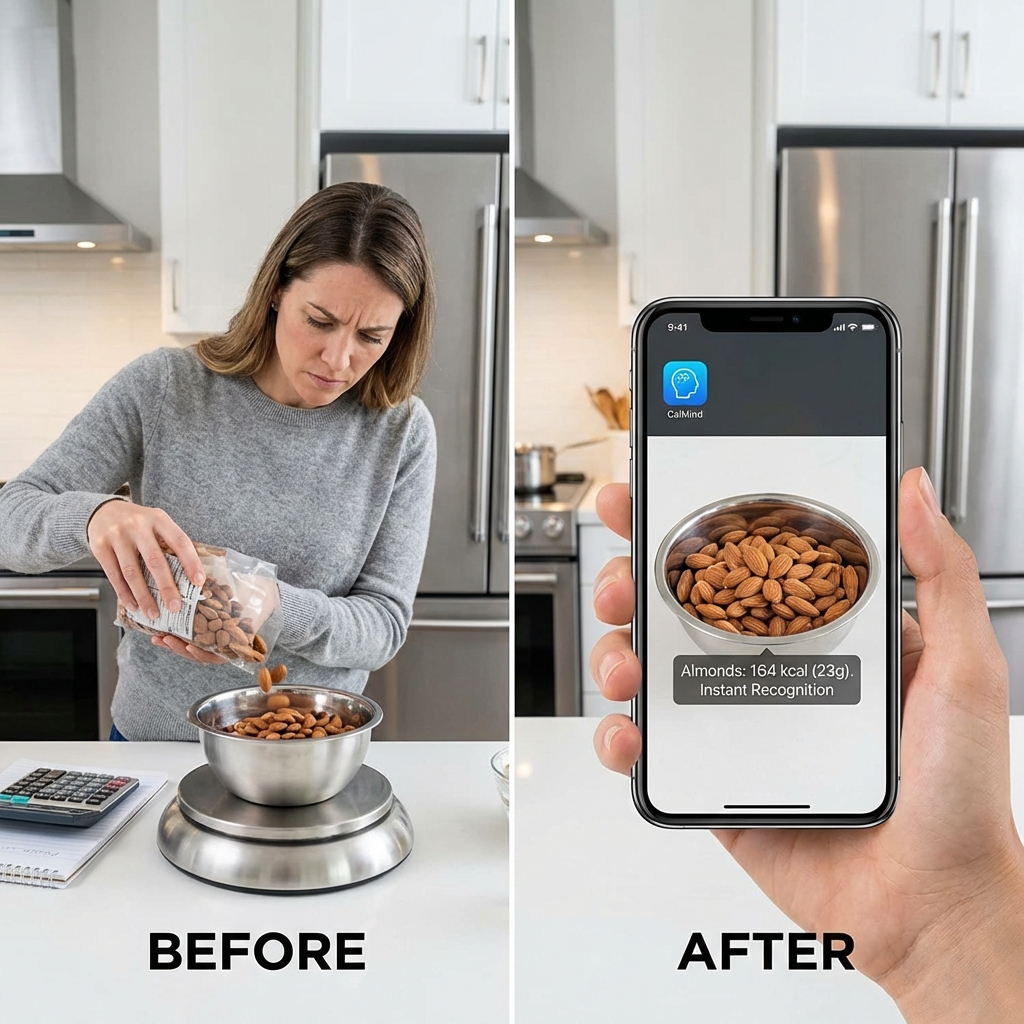
One of the most common questions we get from new users is: "Can a photo really tell me how many calories are in my food?"
The short answer is: Yes, surprisingly well—and often much better than traditional manual logging.
The Problem with Manual Calorie Tracking
Most nutrition studies show that people underestimate their calorie intake by 20% to 50% when logging manually. The main issue is human error. We tend to severely underestimate portion sizes ("that looks like 100g of pasta") and frequently forget hidden high-calorie ingredients like oils and sauces.
How AI Reduces the Error Margin
A photo calorie counter uses computer vision to analyze the physical volume of food on your plate. Unlike human estimation, the AI food tracker is strictly objective. It recognizes that a specific visual volume of rice corresponds to a precise caloric density and macronutrient profile.
While no method (short of a laboratory bomb calorimeter) is 100% accurate, AI creates a reliable, consistent baseline. If the app calculates 500 calories for a meal, and you follow that baseline consistently, your weight loss trajectory becomes highly predictable because the relative accuracy is stable.
Handling Hidden Ingredients
This is the primary constraint of computer vision portion sizing. The AI cannot "see" the butter used to pan-fry a steak if it's completely absorbed. This is why CalMind allows you to make quick post-scan adjustments. However, for 90% of daily meals—salads, sandwiches, plated dinners, whole foods, and snacks—the visual data provides a highly accurate macronutrient estimate.
Consistency Beats Perfection
An AI calorie tracker isn't magic, but it solves the biggest failure point in diets: user fatigue. A photo-based estimate that is highly consistent and done for 3 months easily outperforms a "100% precise" manual log that you abandon after 3 days.
Frequently Asked Questions About AI Accuracy
How accurate is a photo calorie counter compared to manual tracking?
Studies show that manual calorie tracking often results in a 20% to 50% underestimation due to human error in portion sizing and forgotten ingredients. AI calorie counters use computer vision to establish a consistent, objective baseline, often making them more reliable overall.
Can AI calorie trackers estimate portion sizes accurately?
Yes, advanced AI trackers calculate the visual volume of the food on the plate. By evaluating depth and reference objects, AI can estimate the mass and caloric density far better than the average person guessing by eye.
What is the error margin for AI food scanners?
While no method is 100% perfect, an AI food scanner is highly consistent. The error margin typically stems from hidden ingredients like cooking oils, which AI cannot see. However, for identifying standard macronutrients and portion volumes, the AI error margin is significantly lower than human estimation.