 CalMind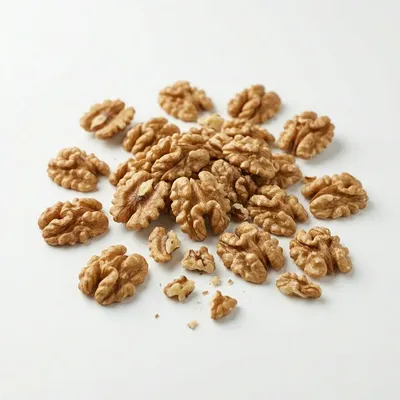
Walnuts calories per 100g: 654 kcal
Nutrition Facts per 100g
Walnuts: Macronutrient Breakdown
*Exceptionally dense in neuro-protective ALA Omega-3 fatty acids. Strict portion control is required.
Walnuts nutrition: halves, 1 oz serving, omega-3 fats, and portions
Walnuts are calorie-dense: about 654 calories per 100g and 185 calories per 1 oz, or roughly 14 walnut halves. Most calories come from healthy polyunsaturated fats.
They can support a balanced diet, but portion control is essential for weight management. The CalMind photo calorie tracker helps estimate walnut halves, crushed walnuts, or snack handfuls from one photo.
Plant-Based Omega-3 Alpha-Linolenic Acid (ALA)
A primary nutritional advantage of walnuts is their specific fatty acid profile. Unlike almonds or peanuts, which rely mostly on monounsaturated fats, walnuts are a significant source of Alpha-Linolenic Acid (ALA), a plant-based Omega-3 fatty acid.
ALA serves as a foundational precursor to other Omega-3 fatty acids that are critical for maintaining cardiovascular health. A standard 1-ounce serving (about 14 walnut halves) provides approximately 2.5 grams of ALA. Studies suggest that an adequate daily intake of ALA can help support healthy blood pressure, improve endothelial function, and support cognitive health as we age.
Strategic Caloric Integration
Due to their energy density, portion control is essential when integrating walnuts into a dietary plan, particularly if weight management is a goal. Snacking directly from a large bag can quickly lead to the consumption of excess calories.
To benefit from their nutritional properties without exceeding caloric goals, dietitians recommend pre-portioning an exact 1-ounce serving. Alternatively, sprinkling 15 grams of crushed walnuts over oatmeal or a salad provides the cognitive and cardiovascular benefits for roughly 100 calories. For tracking ease, the CalMind photo calorie tracker can estimate the portion size and log the corresponding macros from a single photo.
🔥 How to burn 185 Calories (1 ounce serving)?
- Run (6 mph steady rhythm): 18 minutes
- Cycle (Moderate vigorous resistance): 26 minutes
- Walk (3.5 mph brisk active pace): 49 minutes
- Rowing (High intensity output): 16 minutes
Note: Caloric expenditure varies based on age, gender, and current body weight.
Frequently Asked Questions
Are walnuts good for brain health?
Yes. Walnuts contain high concentrations of plant-based Omega-3 fatty acids (ALA), which support cognitive function, combat oxidative stress, and promote healthy brain aging.
How many walnuts should I eat per day?
Dietitians generally recommend limiting walnut consumption to 1 ounce (roughly 14 walnut halves) per day. This portion provides cardiovascular benefits while managing caloric intake.
Are walnuts better raw or roasted?
Raw walnuts contain intact polyunsaturated fats. High-heat roasting can degrade these Omega-3 structures and reduce some of their anti-inflammatory benefits.
Do walnuts cause weight gain?
Walnuts are calorie-dense and can contribute to weight gain if overconsumed. However, when measured and integrated into a balanced diet, their fiber and healthy fats can help control appetite and support weight management.