
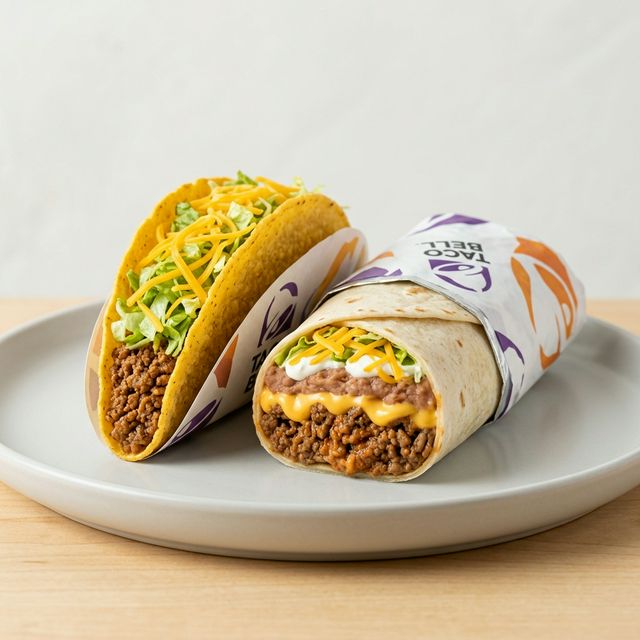
Calories in Taco Bell: AI Macro Tracker
Nutrition Facts per Crunchwrap Supreme
Track Taco Bell Nutrition Instantly with CalMind AI
Taco Bell occupies an astonishingly unique, heavily polarized space within the modern global fast-food landscape. While historically stereotyped across pop culture as a heavily processed, notoriously high-calorie late-night destination, it is simultaneously championed by dedicated competitive bodybuilders, elite athletes, and strict macro-dieters as one of the single most flexible, nutritionally accommodating menus currently available in commercial scale circulation. Because the entire Taco Bell franchise operates on a rigid, highly compartmentalized modular ingredient assembly line—where every single diverse protein, shredded cheese blend, proprietary sauce, and foundational shell is individually portioned and strictly measured—the educated consumer holds absolute, granular control over the final nutritional engineering of their meal. This unprecedented structural flexibility strictly dictates that a single convenient trip to the standard drive-thru can legitimately result in either a pristine, 350-calorie high-protein recovery meal or a staggering 1,500-calorie metabolic disaster, entirely dependent on your specific verbal customization requests at the speaker box. To easily quantify your custom requests, rely on the CalMind photo calorie tracker. Scanning your custom Taco Bell order with the AI immediately registers modifications like Fresco style, extra protein, or omitted sauces, ensuring your daily macros are perfectly precise.
The unquestioned cultural flagship item, the iconic standard Crunchwrap Supreme, perfectly and aggressively illustrates this massive inherent nutritional variance. In its pure default, unedited state straight from the menu board, the standard beef Crunchwrap clocks in at a dense 530 calories, simultaneously carrying roughly 21 grams of total dietary fat, an aggressive 71 grams of dense simple carbohydrates, and a moderate 16 grams of protein. This relatively high foundational caloric baseline is heavily driven almost exclusively by three specific structural carbohydrate and fat components: the massive, oversized refined flour tortilla strictly required to fold the geometric item, the internal deep-fried corn tostada shell that exclusively provides the signature marketable "crunch," and the heavy-handed, liberal dollop of dense, full-fat commercial sour cream. By systematically dissecting and strategically modifying these specific components, savvy dieters can dramatically alter the final nutritional profile while successfully retaining the core desired flavor experience and vital textural contrast.
The Unrivaled Power of the 'Fresco Style' Diet Hack
Without question, the absolute most powerful, heavily utilized, and clinically effective biological tool available to health-conscious Taco Bell consumers is the legendary, systematically embedded "Fresco Style" modification menu button. By simply verbally requesting any standard menu item "Fresco Style" during the initial order process, the kitchen assembly line is strictly instructed by the point-of-sale system to systematically eliminate all dense, dairy-based sauces—including the heavy melted nacho cheese sauce, various shredded cheddar and pepper jack cheese blends, and the thick, calorie-dense reduced-fat sour cream. In their direct place, the kitchen aggressively substitutes copious, generous amounts of freshly diced, virtually zero-calorie pico de gallo (composed strictly of fresh tomatoes, sharp white onions, and bright cilantro).
Clinically speaking, seamlessly executing the Fresco Style modification on a traditionally dense, heavy item like the classic Burrito Supreme instantly slashes the total inherent fat content by up to an astonishing 25 percent and completely eliminates roughly 50 to 80 empty fat-derived calories in mere seconds. Because highly processed commercial dairy fats carry a dense 9 calories per gram—compared heavily to the sparse 4 calories per gram found natively in the fibrous, water-rich tomatoes of the fresh pico de gallo—this single, zero-cost, frictionless modification stands as one of the most effective rapid weight-loss strategies consistently available in modern fast-food dining. It brilliantly leverages dietary volume substitution, providing a heavy, wet, highly flavorful acidic salsa that physically fills the human stomach cavity and stimulates the palate without triggering aggressive blood sugar spikes or biochemically promoting passive adipose fat storage.
Optimizing High-Protein Macros for Muscle Synthesis
For dedicated individuals actively prioritizing lean muscle mass synthesis, rapid workout recovery, and aggressive daily protein consumption, the widely expanded Taco Bell "Power Menu Bowl" franchise serves as an incredibly solid, heavily reliable nutritional foundation on the road. A standard unmodified Chicken Power Menu Bowl heavily delivers roughly 460 total calories while packing an explosive, highly bioavailable 26 grams of complete lean poultry protein. This exceptional, highly favorable protein-to-calorie ratio fundamentally outperforms and nutritionally eclipses almost every comparable fast-food burger or fried chicken sequence currently dominating the physical commercial market.
To further hyper-optimize and meticulously refine this specific premium bowl for severe, strict cutting phases or intense bodybuilding contest preparation, seasoned sports nutritionists strongly recommend explicitly requesting "no seasoned rice, extra double black beans." The deeply seasoned, slow-simmered black beans elegantly provide massive, heavy doses of soluble dietary fiber—which powerfully slows complex gastric emptying and brutally suppresses standard ghrelin (the primary mammalian hunger hormone)—while completely eliminating the heavy, rapid-digesting simple starch load of the heavily seasoned white rice. In stark, dramatic contrast, highly decadent legacy specialty items specifically engineered purely for maximum immediate mouthfeel and rapid dopamine response, such as the infamous Cheesy Gordita Crunch or the massive Quesarito, aggressively pack roughly 500 heavily processed calories but offer significantly less physical meal volume or satiating fiber. These specific items digest incredibly rapidly in the upper GI tract, aggressively spiking systemic insulin levels and directly triggering massive, unavoidable rebound hunger within mere hours of initial consumption, effectively ruining careful daily macro planning.
🔥 How to burn 530 Calories (Crunchwrap Supreme)?
- Run (6 mph steady pace): 53 minutes
- Cycle (Moderate vigorous resistance): 75 minutes
- Walk (3.5 mph brisk power pace): 140 minutes
- Rowing (High intensity): 48 minutes
Note: Caloric expenditure varies based on age, gender, and current body weight.
Frequently Asked Questions
What is Fresco Style?
It's a customization option where you replace mayo-based sauces, cheeses, and reduced-fat sour cream with pico de Gallo. It reduces fat by up to 25%.
Are the beans healthy?
Yes, both black beans and refried beans are good sources of fiber, though refried beans may contain more added fat.
How many calories are in a Taco Bell Crunchwrap Supreme?
A standard Crunchwrap Supreme contains 530 calories, 21g of fat, and 71g of carbs.
What is the lowest calorie item at Taco Bell?
The Crunchy Taco is one of the lowest, at just 170 calories and 9g of fat per taco.
CalMind