 CalMind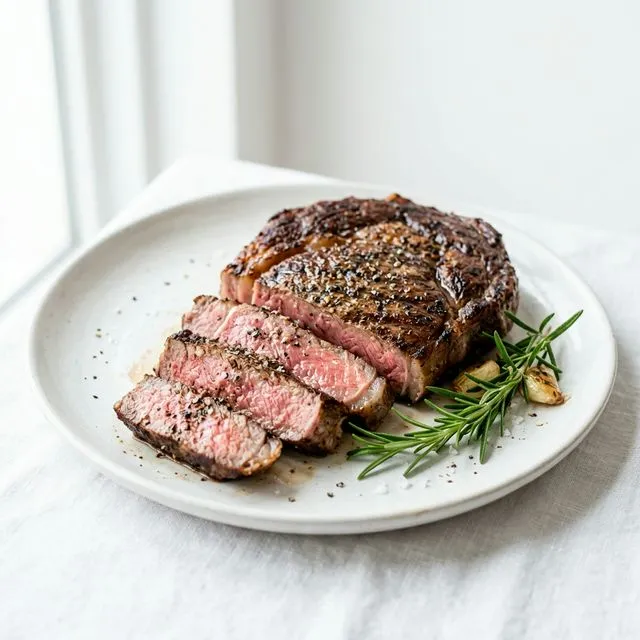
Steak calories per 100g: 271 kcal
Nutrition Facts per 100g (Ribeye, Grilled)
Steak nutrition: ribeye, sirloin, filet, lean cuts, and portions
Steak calories depend heavily on the cut. A well-marbled ribeye has about 271 calories, 26g protein, 0g carbs, and 18g fat per 100g, while leaner sirloin or eye of round can fall below 180 calories for the same weight.
If your goal is weight loss or lean protein, compare both the cut and the cooked portion size. CalMind's AI photo scanner helps you scan steak on the plate, estimate the serving, and log calories and macros without manual weighing.
The Bioavailability of Heme Iron
Beyond its massive protein content, steak is globally recognized as the absolute premier dietary source of "heme" iron. Unlike the non-heme iron found in dense leafy greens (like spinach or kale), heme iron is biologically native to animal blood and muscle tissue. Because human bodies are structurally adapted to process animal-based iron, the gastrointestinal tract can absorb heme iron up to three times more efficiently than plant-based variants.
This rapid, highly efficient absorption actively prevents clinical anemia, directly supports the continuous generation of fresh red blood cells, and fundamentally powers critical cellular oxygen transport during intense cardiovascular exercise. For actively menstruating women, endurance athletes, or individuals suffering from chronic lethargy, regularly incorporating a moderate, lean 4oz (113g) steak into their weekly diet can radically correct physiological iron deficiencies far faster than standard oral supplements.
Navigating Fats: Saturated vs. Monounsaturated
The fat content within a steak is frequently a source of widespread nutritional confusion. The visible white fat banding the outside of the meat, and the delicate web-like "marbling" running directly through the muscle tissue, is composed of a complex mixture of fatty acids. Approximately half of the fat in a standard commercial steak is actually monounsaturated fat—the exact identical structurally beneficial fat prominently found in Mediterranean olive oil, known for supporting cardiovascular health.
However, the remaining half is primarily saturated fat. High dietary intakes of saturated animal fat can actively raise systemic LDL (the "bad" cholesterol) in susceptible individuals, potentially increasing the risk of arterial plaque buildup over decades. This is precisely why modern nutritional cardiology strongly emphasizes selecting lean cuts (Sirloin, Tenderloin, Flank) over highly marbled, intensely fatty cuts (Ribeye, T-Bone) for routine weekly consumption, saving the richer, structurally denser steaks for occasional culinary treats.
🔥 How to burn 271 Calories (100g Ribeye)?
- Run (Steady Pace): 27 minutes
- Cycle (Moderate Resistance): 36 minutes
- Walk (Brisk Pace): 73 minutes
Beef Cuts: Nutrition Comparison (Raw, Per 100g)
*Marbling (intramuscular fat) significantly increases caloric density in premium cuts.
Frequently Asked Questions
Is steak good for weight loss?
Yes, especially if you choose lean cuts such as sirloin or eye of round. A 6 oz top sirloin has roughly 350 calories and 46g protein, making it filling for a calorie-controlled meal.
How much steak should I eat per week?
Many nutrition guidelines suggest keeping cooked red meat around 350-500g per week. Use lean cuts most often and save higher-fat ribeye or T-bone for occasional meals.
Does the marbling in ribeye make it unhealthy?
Marbling adds flavor but also raises calories and saturated fat. Ribeye can fit in moderation, while sirloin or eye of round is better for frequent lean-protein meals.
Is grass-fed steak actually better than grain-fed?
Grass-fed beef may contain slightly more omega-3 fats and CLA. Protein and calories are usually similar, so the cut and portion size matter more for tracking.