 CalMind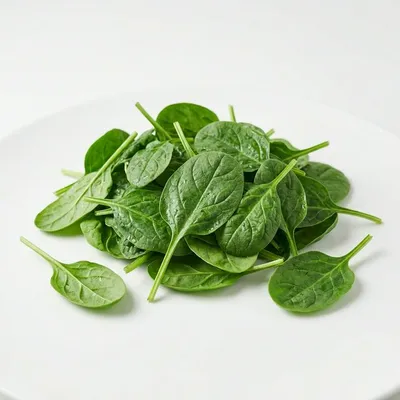
Spinach calories per 100g: 23 kcal
Nutrition Facts per 100g (Raw)
Spinach: Nutrition Comparison
*Cooking spinach significantly reduces its physical volume but concentrates its nutrients per cup.
Spinach nutrition: raw leaves, cooked spinach, iron, oxalates, and portions
Raw spinach has about 23 calories per 100g, with 2.9g protein, 3.6g carbs, and 0.4g fat. A cup of raw spinach is only about 7 calories because the leaves are light and high in water.
Cooked spinach has similar calories per 100g but much less volume, so it is easy to eat more than expected. The CalMind photo calorie tracker helps scan raw salads or cooked portions and estimate the serving size.
The Iron Absorption Challenge
Spinach is globally famous for its iron content—partially popularized by early 20th-century cartoons. While it does contain a respectable 2.7mg of iron per 100g serving, the reality of biological human digestion is far more complex. Spinach provides "non-heme" iron, a plant-based variant that the human gastrointestinal tract struggles to absorb efficiently compared to the "heme" iron found in red meats like steak or liver.
Furthermore, raw spinach leaves naturally contain high concentrations of oxalic acid (oxalates) and assorted polyphenols. These organic compounds bind tightly to the innate iron and calcium inside the digestive tract, actively blocking your body from fully absorbing these vital minerals. To actively "hack" and significantly improve your biological iron absorption from spinach, you must chemically pair it with an intense exterior source of Vitamin C. Squeezing fresh, acidic lemon juice heavily over a raw spinach salad, or stir-frying the wilted greens alongside bright red bell peppers, actively breaks these restrictive oxalic bonds and significantly boosts systemic iron uptake.
Raw Volume vs. Cooked Density
The culinary debate between eating raw versus fully cooked spinach fundamentally alters how you consume the vegetable's total nutrition. Raw spinach leaves are incredibly physically voluminous; eating an entire 100g bag requires significant chewing and acts as a powerful mechanical appetite suppressant. Raw applications expertly preserve delicate, heat-sensitive, water-soluble nutrients, specifically Vitamin C and raw folate.
Conversely, applying intense heat immediately collapses the rigid cellular walls within the physical leaves. An entire massive frying pan of fresh spinach will violently wilt down into barely a half-cup of dark green mush in under two minutes. This rapid reduction significantly concentrates the sheer physical mass of the food. Consuming cooked spinach allows you to easily swallow ten times the total volume of leaves in a single sitting, significantly multiplying your overall total intake of robust, heat-stable nutrients like iron, dense dietary fiber, and cellular calcium. Both preparations offer unique biological advantages and should be strategically rotated into a balanced weekly nutrition plan.
🔥 How to burn 7 Calories (1 cup raw)?
- Run (Steady Pace): 1 minute
- Cycle (Moderate Resistance): 1 minute
- Walk (Brisk Pace): 2 minutes
Frequently Asked Questions
Is spinach better raw or cooked?
Both are useful. Raw spinach keeps more vitamin C, while cooked spinach makes it easier to eat a larger volume.
How much spinach should I eat daily?
One to two cups raw or about half a cup cooked is a practical serving. People on blood thinners should keep vitamin K intake consistent.
Does spinach build muscle?
No. Spinach is rich in micronutrients but low in protein, so it should not replace protein foods for muscle gain.
What are oxalates in spinach?
Oxalates are natural compounds that can matter for people prone to calcium-oxalate kidney stones. Cooking can reduce some oxalates.