 CalMind
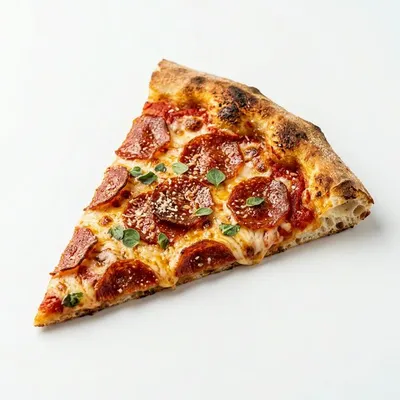
Pizza calories per slice: 285 kcal
Nutrition Facts per Slice (120g - Standard Chain Pizza)
Pizza Varieties: Nutrition Comparison (Fast Food, Per Medium Slice ~120g)
Pizza calories: slices, crust, toppings, cheese, and delivery portions
Universally dominating the modern global fast-food landscape, commercial pizza strictly represents a fascinating, highly complex macronutrient battleground. As a highly palatable food, it flawlessly combines three distinct, highly dense biological energy vectors into one highly palatable, fiercely addictive delivery system: heavily refined simple carbohydrates representing the foundational dough base, massive concentrations of coagulated saturated dairy lipids forming the melted cheese matrix, and frequently, hyper-processed, heavily salted cured meats aggressively piled directly on top. Consequently, a single, aggressively portioned commercial slice can mathematically range anywhere from a relatively manageable 200 systemic calories up to a profoundly devastating 500+ calories, depending entirely on your specific crust architecture and topping density.
When mechanically analyzing the strict nutritional anatomy of a perfectly standard, mass-market medium cheese or straight pepperoni slice (equating to roughly 120 absolute grams by raw weight), major international corporate delivery chains—explicitly including ubiquitous giants such as Domino's, Papa John's, and Pizza Hut—consistently maintain remarkably similar, rigorously engineered mathematical calorie profiles. These standard slices predictably hover firmly around the 280 to 300 total caloric mark. This specific massive energy payload aggressively deploys roughly 10-12 absolute grams of dense total dietary fat and a massive 35-37 solid grams of highly refined, rapidly digesting simple carbohydrates.
The Carbohydrate and Sodium Spike
The single greatest physiological danger inherently associated directly with routine frequent commercial pizza consumption entirely revolves around its brutal glycemic and hypertensive impact. Because standard mass-market pizza crust is structurally manufactured using ultra-refined, fiercely bleached white flour completely stripped of protective slowing dietary fiber, the resulting dense carbohydrates rapidly digest immediately into simple glucose. This massive physiological carbohydrate dump powerfully spikes systemic resting blood sugar levels, forcing the human pancreas to defensively pump out massive offsetting insulin volumes. This subsequent intense insulin crash is exactly what directly triggers profound late-night physical lethargy and fierce secondary reactive hunger mere hours after heavy consumption.
Simultaneously, commercial pizza acts explicitly as an intensely concealed biological sodium delivery vehicle. The complex synergistic combination of aged preserved mozzarella cheese, industrially spiced tomato base sauce, and chemically salt-cured meats routinely forces a single baseline slice to easily exceed 600 absolute milligrams of total dietary sodium. Consuming just three standard corporate slices effortlessly pushes the average unsuspecting human consumer perilously close to extreme daily Rigorous maximum cardiovascular sodium thresholds.
Strategic Macronutrient Mitigation
Despite these formidable systemic biological challenges, intelligently modifying the structural pizza architecture can significantly reduce its massive baseline caloric penalty. Actively electing a rigorously thin, unflavored crisp crust immediately saves roughly 50 to 80 entirely unnecessary empty carbohydrate calories per single slice compared to dense, oil-soaked deep-dish or thick hand-tossed pan variants. Furthermore, deliberately replacing heavy, dense processed pork sausage and greasy pepperoni with high-volume, extremely low-calorie raw vegetable toppings safely reduces gross inflammatory lipid intake while massively boosting critical digestive fiber volume. Finally, physically blotting the visible liquid grease directly off a heavily laden commercial cheese slice using a clean paper napkin functionally permanently eliminates upwards of 20 to 40 pure fat calories instantly. To take the guesswork out of pizza night, rely on the CalMind photo calorie tracker. Just point your camera at your slice, and our AI will quickly identify the toppings, crust thickness, and provide an accurate macro breakdown, preserving your diet while you enjoy your favorite food.
🔥 How to burn 285 Calories?
- Run (6 mph pace): 28 minutes
- Cycle (Moderate effort): 40 minutes
- Walk (3.5 mph brisk pace): 80 minutes
Frequently Asked Questions
Is thin crust lower calorie?
Yes. Choosing thin crust saves about 50-80 calories per slice compared to typical hand-tossed or pan crust.
How to make pizza healthier?
Load up heavily on veggies instead of extra cheese or meat, simply ask for half-cheese, or physically blot excess oil with a clean napkin to instantly save ~20-40 calories per slice.
Are cauliflower crust pizzas actually lower in total calories than traditional crusts?
Not necessarily. While cauliflower crusts eliminate gluten and reduce carbs, commercial manufacturers use full-fat cheese and heavy binding oils to hold the crust together. This raises the fat content so much that the total calories are often identical to regular flour crust.
How impactful is requesting 'half-cheese' on a standard delivery pizza?
Very. Asking your local delivery chain for 'half-cheese' seamlessly slashes approximately 40 to 60 dense fat calories off every single slice. This simple hack mitigates the saturated dairy fat penalty without sacrificing core flavor.