 CalMind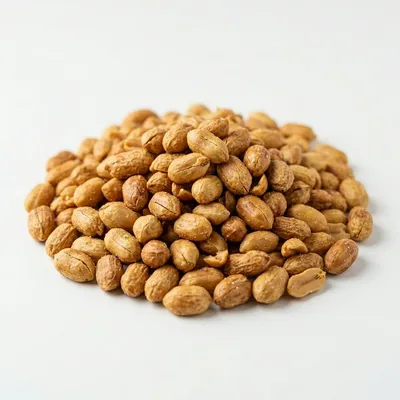
Peanuts calories per 100g: 567 kcal
Nutrition Facts per 100g (Dry Roasted)
Peanut Preparations: Nutrition Comparison (Per 1 oz / 28g)
Peanuts nutrition: dry roasted, raw, oil roasted, count, and portions
Dry-roasted peanuts have about 567 calories per 100g. A 1 oz serving is around 164 calories and usually equals about 28 peanuts, depending on size.
Peanuts provide protein and healthy fats, but handfuls are easy to undercount. Use the CalMind photo calorie tracker to estimate a snack portion and avoid turning a small handful into several hundred calories.
The Resveratrol and Micronutrient Matrix
Beyond their formidable foundational macronutrient footprint, peanuts operate seamlessly as an incredibly robust biological delivery vehicle for countless essential organic micronutrients and potent trace minerals. A standard 100-gram serving completely dominates daily physiological requirements, quickly providing nearly 60% of necessary dietary niacin (Vitamin B3) explicitly required for deep cellular energy metabolism, alongside 60% of recommended active folate deeply essential for ongoing tissue synthesis. Furthermore, they supply massive structural concentrations of critical skeletal macrominerals, routinely delivering roughly 40% of daily magnesium and 38% of necessary organic phosphorus.
Most remarkably, beneath their thin, fibrous reddish skin, raw peanuts naturally harbor highly significant measurable concentrations of resveratrol. This specific organic polyphenolic antioxidant compound, most culturally famous for its presence in premium fermented red wines, has been rigorously scientifically associated directly with powerfully extending baseline cellular longevity, improving critical vascular endothelial biological function, and protecting delicate neural tissues from long-term degenerative oxidative damage. By consuming whole peanuts complete with their intact skins, health enthusiasts can significantly maximize their total systemic antioxidant exposure.
Mastering the Satiety Index
A frequent, seemingly contradictory nutritional paradox surrounds chronic peanut consumption: despite their undeniable mathematical caloric density, rigorous clinical studies consistently associate regular groundnut eaters with measurably lower baseline body mass indices and significantly reduced rates of severe clinical obesity. This profound counterintuitive biological phenomenon inherently relies entirely upon the massive synergistic digestive impact generated by simultaneously deploying heavy proteins, complex structural fibers, and dense satiating fat calories.
When systematically digested, this specific complex nutrient matrix triggers extreme long-lasting feelings of profound bodily fullness, explicitly delaying the subsequent onset of secondary reactive hunger signaling for multiple consecutive hours. Essentially, a strictly portioned single-ounce serving of dry-roasted peanuts effectively prevents catastrophic later-day dietary bingeing by chemically and mechanically stabilizing systemic gastric emptying rates and blood glucose levels, ultimately generating a massive net daily caloric deficit. However, snacking directly from a large bag is a recipe for disaster; instead, analyze your exact handful using the CalMind photo calorie tracker. One quick picture instantly calculates your specific fat, carbohydrate, and protein macros, removing the stress of manual counting.
🔥 How to burn 161 Calories (1oz (28g))?
- Run: 16 minutes
- Cycle: 23 minutes
- Walk: 43 minutes
Frequently Asked Questions
Are peanuts good for weight loss?
Surprisingly, yes — if carefully portion-controlled. Despite being inherently calorie-dense, clinical studies show routine peanut consumers tend to weigh less. The dense protein, dietary fiber, and healthy fat matrix significantly increases satiety. Stick to a 1oz measured serving.
How many peanuts is 100 calories?
About 17-18 dry-roasted peanuts equal approximately 100 calories. A single standard peanut has roughly 5.5 calories. Pre-portioning snacks directly into small containers helps prevent severe accidental overeating.
Is there a significant nutritional difference between raw, dry-roasted, and oil-roasted peanuts?
Yes. Raw peanuts retain the highest total concentration of heat-sensitive antioxidants and vitamins. Dry-roasted peanuts offer superior flavor without adding external calories. Oil-roasted variants are submerged in processed vegetable oils, needlessly increasing total caloric load and added fat exposure.
Should I be concerned about naturally occurring aflatoxins in commercial peanuts?
While aflatoxins are a valid global agricultural concern, rigid modern regulatory standards and extensive mass-market testing protocols ensure commercial supplies safely remain well below health thresholds. Purchasing reputable domestic brands heavily minimizes any tangible risk.