
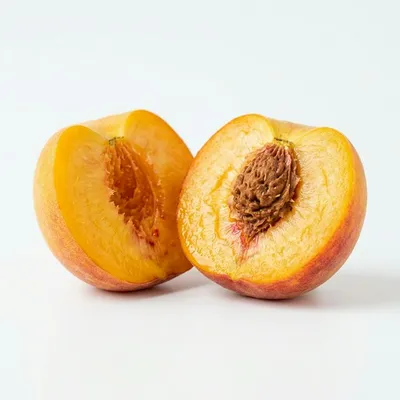
Peach calories per 100g: 39 kcal
Nutrition Facts per 100g
Peach Varieties: Nutrition Comparison (Raw, Per 100g)
Peach nutrition: low-calorie fruit for snacks and desserts
Universally celebrated globally for their explosive, deeply refreshing juiciness and highly distinct, intensely aromatic natural sweetness, peaches represent an strong option of seasonal summer harvests. Fortunately for dedicated athletes and disciplined individuals strictly managing their daily macronutrient intake, this incredibly decadent, dessert-like sensory experience arrives natively paired with a remarkably negligible caloric footprint. This profound structural dichotomy definitively positions the humble peach as one of the most highly efficient, mechanically satisfying, and structurally voluminous sweet fruits available across the entire modern botanical spectrum. Don't waste time looking up exact peach sizes; just use the CalMind photo calorie tracker. Scanning the peach with your phone will yield immediate, highly precise caloric and carbohydrate data.
When systematically analyzing their raw foundational macronutrient profile, standard fresh peaches yield a mere 39 total systemic calories per precisely measured 100-gram serving. This absolute caloric sparsity is primarily facilitated by their overwhelming internal aqueous structure—peaches exist natively as nearly 89% pure, highly functional biological water directly bound within a resilient natural dietary fiber matrix. In terms of direct solid fuel, they seamlessly deliver approximately 9.5 grams of raw, rapidly accessible complex and simple carbohydrates. This energetic payload is delivered while simultaneously contributing virtually zero measurable dietary fat (registering at a bare 0.3 grams) and providing a biologically negligible trace of protein (roughly 0.9 grams). Consequently, peaches stand distinctly as a premier, hyper-clean carbohydrate source engineered perfectly for immediate, guilt-free glycogen replenishment.
p>The Lutein and Zeaxanthin Antioxidant Complex
Moving gracefully beyond simple base caloric tracking, peaches operate natively as a highly potent biological delivery mechanism for several critical, specialized organic micronutrients. A single medium-sized fresh peach quickly provides over 15% of the strict recommended daily physiological intake explicitly for Ascorbic Acid (Vitamin C), fundamentally supporting systemic immune response and internal natural collagen synthesis. Furthermore, the brilliant underlying golden-orange tissue pigment visually characterizing the deep physical flesh serves as a direct, unmistakable biological indicator of massive native beta-carotene concentrations.
Most remarkably, peaches are uniquely exceptionally rich in lutein and zeaxanthin—two highly specialized, intensely potent carotenoid antioxidants structurally proven clinically to strongly accumulate directly within the delicate macular region of the human retina. Regular, consistent dietary consumption of these specific targeted native antioxidant compounds has been rigorously definitively scientifically linked directly to a powerful structural defense against dangerous, long-term oxidative cellular damage heavily triggered by intense daily environmental UV exposure and chronic modern blue-light screen saturation. This specific functional characteristic firmly mathematically elevates the simple peach far beyond a basic sweet snack directly into the elite realm of preventative optical biology.
The Critical Dietary Importance of the Skin
A frequent, highly detrimental nutritional error commonly executed by modern consumers actively involves artificially peeling the delicate fuzzy external skin completely away from the soft internal flesh prior to physical consumption. While the slightly abrasive external texture undeniably initially deters some specific sensory profiles, this thin outer biological barrier natively contains massive functional concentrations of the fruit’s total dietary fiber and overwhelming majorities of its active defensive antioxidant payload.
Biologically speaking, the peach skin functions as the fruit's primary protective barrier against environmental solar radiation and predatory insects. Consequently, the plant shuttles concentrated volumes of protective polyphenols, chlorogenic acids, and insoluble fibers directly into this external layer. By purposely peeling and discarding this outer skin, unaware dieters needlessly throw away nearly half of the total potential health benefits, dramatically reducing the fruit's ability to safely regulate gastric blood sugar absorption.
🔥 How to burn 39 Calories?
- Run (6 mph pace): 4 minutes
- Cycle (Moderate effort): 5 minutes
- Walk (3.5 mph brisk pace): 9 minutes
- Rowing (Vigorous): 4 minutes
Note: Caloric expenditure varies based on age, gender, and current body weight.
Frequently Asked Questions
How many calories are in a peach per 100g?
A fresh peach has about 39 calories per 100g, with roughly 9.5g carbs and very little fat.
Are peaches good for weight loss?
Yes. Peaches are low in calories, high in water, and sweet enough to replace higher-calorie desserts.
Are canned peaches higher in calories?
They can be. Canned peaches packed in heavy syrup add sugar and calories, while peaches packed in water stay closer to fresh fruit.
Should you eat peach skin?
Yes, if you tolerate the texture. The skin adds fiber and antioxidants, so wash it well instead of peeling it.
CalMind