 CalMind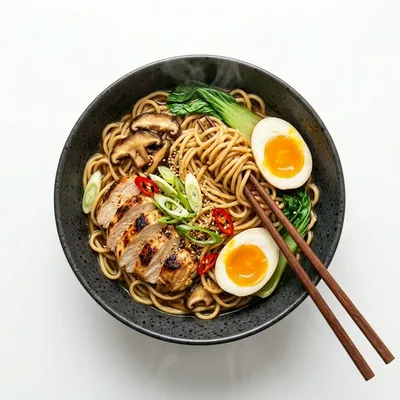
Noodles calories per 100g: 138 kcal cooked
Nutrition Facts per 100g
Noodle Varieties: Nutrition Comparison (Cooked, Per 100g)
Noodles nutrition: cooked calories, carbs, ramen, and portions
Functioning as a foundational dietary staple across countless international culinary traditions, noodles represent one of the most universally consumed, energetically dense carbohydrate delivery mechanisms. Prized for their satisfying, resilient chewy texture and their remarkable capability to absorb incredibly rich flavor profiles from surrounding broths and sauces, they operate as the base for thousands of traditional meals. Structurally, standard commercial noodles function predominantly as a dense refined carbohydrate source, engineered to deliver rapid, highly accessible glucose directly into the human bloodstream for immediate energy.
When analyzing a baseline portion, a typical 100-gram prepared serving of basic wheat noodles yields approximately 138 total calories. This concentrated caloric density is predominantly driven by 25.1 grams of complex carbohydrates. While the serving inherently provides a modest 4.5 grams of biological protein and a strictly minimal 2.1 grams of naturally occurring fats, the dominant macro profile is heavily carbohydrate-based. Because refined noodles are physically compact and notoriously easy to accidentally overconsume in massive restaurant-style portions, they require deliberate, disciplined portion control to successfully avoid pushing daily metabolic budgets into an accidental caloric surplus. With the CalMind photo calorie tracker, you can instantly scan your noodle bowls, and our highly advanced AI will accurately measure portion sizes and perfectly log your total carbohydrate intake.
The Nutritional Difference: Wheat, Rice, and Egg Noodles
The precise metabolic impact of any specific noodle dish depends entirely upon the foundational ingredient matrix utilized during initial production. Traditional Italian pasta or thick Japanese Udon utilizes refined white wheat flour, creating a highly structured gluten network that provides a satisfying bite while simultaneously delivering a rapid glycemic load to the pancreas—unless actively slowed by accompanying dietary fiber.
Conversely, translucent Rice noodles, favored across Southeast Asian culinary traditions, completely lack foundational gluten, making them an excellent secure primary carbohydrate alternative for individuals with Celiac disease or gluten intolerance. Meanwhile, traditional yellow Egg noodles incorporate whole raw chicken eggs directly into their baseline flour dough formulation. This specific structural addition visibly enriches their coloration while simultaneously increasing both their baseline fat content and functional protein values per serving.
Strategic Dietary Alternatives: Soba and Shirataki
For individuals meticulously tracking macronutrient ratios for strict athletic or weight-management protocols, standard refined white flour noodles can present metabolic challenges. However, specific tactical alternatives exist. Authentic Japanese Soba noodles, constructed largely from robust whole-grain ancient buckwheat flour, consistently provide immensely superior, significantly elevated levels of complex dietary fiber and essential trace minerals absent in refined wheat variants. This fibrous backbone structurally blunts the natural post-meal blood sugar spiking effect.
Furthermore, for hyper-strict calorie-controlled volume eating protocols, traditional Japanese Shirataki noodles (often commercially rebranded as "Shortcut Noodles") represent a genuine biological anomaly. Constructed entirely from isolated, completely indigestible glucomannan fiber extracted directly from the native konjac yam plant, these completely translucent noodles magically yield virtually zero usable human calories. They essentially safely pass completely intact through the human digestive tract. Instead of providing fuel, they act exclusively as a highly satisfying physical textural vehicle for consuming savory complex sauces without contributing whatsoever to total daily macro totals.
🔥 How to burn 138 Calories?
- Run (6 mph pace): 13 minutes
- Cycle (Moderate effort): 19 minutes
- Walk (3.5 mph brisk pace): 34 minutes
- Rowing (Vigorous): 12 minutes
Note: Caloric expenditure varies based on age, gender, and current body weight.
Frequently Asked Questions
How many calories are in cooked noodles per 100g?
Cooked noodles have about 138 calories per 100g, with 25.1g carbs and 4.5g protein.
Are noodles good for weight loss?
They can fit if portions are measured. Large bowls, sauces, oil, and toppings usually drive calories up.
Do noodles spike blood sugar?
Refined wheat or rice noodles can spike blood sugar faster if eaten without protein, fiber, or vegetables.
Are instant ramen noodles higher in calories?
Often yes. Many instant ramen blocks are fried in oil and also bring a very high sodium load.