 CalMind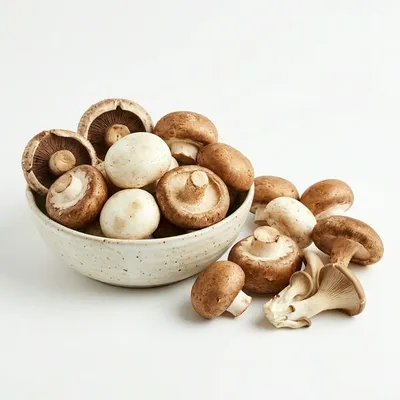
Mushroom calories per 100g: 22 kcal
Nutrition Facts per 100g
Mushroom Varieties: Nutrition Comparison (Raw, Per 100g)
Mushroom nutrition: calories, cups, protein, and cooking fat
Occupying a fundamentally unique biological and culinary category, edible mushrooms belong neither to the traditional plant nor animal kingdom. As highly specialized edible fungi, they deliver an intensely savory, incredibly earthy umami flavor profile while mathematically functioning as one of the most effective ultra-low-calorie volume foods available. Frequently utilized as a highly satisfying, structurally dense meat substitute or a deeply robust vegetable component, mushrooms seamlessly elevate the profound flavor complexity of thousands of global dishes without meaningfully inflating the meal's total caloric budget. With the CalMind photo calorie tracker, you can quickly analyze a bowl of sautéed mushrooms to log exact portion sizes and macros.
At a remarkably modest 22 total calories per standardized fresh 100-gram serving, traditional white button or cremini mushrooms are structurally engineered for massive dietary volume. They efficiently provide a surprisingly sturdy 3.1 grams of functional biological protein, a heavily suppressed 3.3 grams of complex carbohydrates (predominantly occurring in the highly beneficial form of indigestible fibrous dietary chitin), and a virtually non-existent 0.3 grams of naturally occurring trace fats. This specific, tightly controlled macro ratio allows structural dieters to strongly consume immense physical quantities of mushrooms to satisfy deep stretch-receptor hunger while remaining perfectly secure within extremely strict fat-loss parameters.
Preparation Alert: The "Sponge Effect"
Due to their deeply porous cellular structure, mushrooms violently and rapidly absorb any cooking fats introduced to the pan, destroying their low-calorie profile.
The Vitamin D and Selenium Powerhouse
Beyond their notably efficient baseline macros, mushrooms specifically possess incredibly unique micronutrient capabilities. Remarkably, mushrooms that are physically exposed directly to raw ultraviolet sunlight or targeted UV lamps actively synthesize massive quantities of biologically potent Vitamin D. In fact, sun-exposed mushrooms famously function as one of the only globally widespread, completely natural non-animal dietary sources of active Vitamin D available to the human digestive system. For individuals adhering strictly to tightly controlled vegan or strict vegetarian protocols, integrating UV-treated mushrooms serves as an absolutely essential nutritional strategy for maintaining baseline bone density and optimal immune defense.
Furthermore, mushrooms act as a critical natural delivery system for elemental selenium. This incredibly powerful trace mineral operates directly within the body as a potent systemic antioxidant, explicitly neutralizing dangerous cellular free radicals generated by intense physical training or chronic environmental stress. The concentrated presence of selenium, thoroughly combined with a heavily robust array of essential complex B-vitamins—specifically riboflavin and heavy dietary niacin—ensures that despite their near-zero caloric footprint, mushrooms actively significantly contribute to optimal cellular energy production and overall hormonal stability.
Chitin Fiber and Deep Gut Health
The specific carbohydrate structure found strictly within the cell walls of mushrooms is fundamentally different from traditional agricultural plants. Instead of standard digestible cellulose, mushrooms uniquely utilize chitin—the exact same highly resilient fibrous beta-glucan structural compound found naturally in the rigid exoskeletons of wild crustaceans. This specific type of highly resilient functional fiber strongly resists basic upper digestive tract breakdown, purposefully traveling completely intact deep into the lower human intestine.
Once situated in the lower gut, this fibrous chitin effectively acts as a highly potent prebiotic, actively significantly stimulating the rapid proliferation of notably beneficial digestive microbiome bacteria. This specific targeted bacterial fermentation systematically actively improves overall robust gut integrity, dramatically reduces chronic systemic inflammation, and famously physically strengthens the primary autoimmune response. Consequently, routinely heavily incorporating robust dense mushrooms into daily dietary protocols provides intense long-term digestive advantages that deeply extend far beyond basic immediate caloric management.
🔥 How to burn 22 Calories?
- Run (6 mph pace): 2 minutes
- Cycle (Moderate effort): 3 minutes
- Walk (3.5 mph brisk pace): 5 minutes
- Rowing (Vigorous): 2 minutes
Note: Caloric expenditure varies based on age, gender, and current body weight.
Frequently Asked Questions
How many calories are in mushrooms per 100g?
White mushrooms have about 22 calories per 100g, with 3.1g protein and 3.3g carbs.
How many calories are in 1 cup of mushrooms?
One cup of sliced raw mushrooms is about 70g and has roughly 15 calories.
Are mushrooms good for weight loss?
Yes. Mushrooms are low in calories, high in volume, and add a savory texture without much fat.
Do cooked mushrooms have more calories?
Plain cooked mushrooms stay low calorie, but oil or butter can raise calories quickly because mushrooms absorb fat.