 CalMind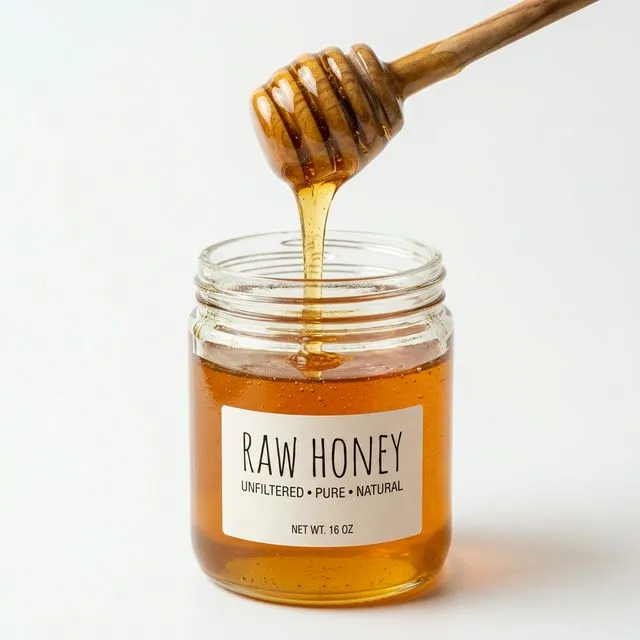
Honey calories per tablespoon: 64 kcal
Nutrition Facts per 100g (Raw)
Honey Nutritional Comparison
Honey nutrition: tablespoon calories, sugar, raw honey, and portions
Honey has about 64 calories per tablespoon and 304 calories per 100g. It can improve flavor in tea, yogurt, or oatmeal, but a casual drizzle quickly becomes added sugar. Use the CalMind photo calorie tracker to scan bowls and drinks where honey is mixed in and estimate the hidden sugar calories.
The Raw Honey Advantage over Refined Sugar
While honey and heavily processed white granular table sugar chemically represent similar fundamental caloric loads, true raw, unpasteurized honey offers several minor but measurable holistic advantages. Genuine raw honey retains crucial trace amounts of vital living enzymes, microscopic pollen, essential amino acids, and key antioxidant plant polyphenols. Furthermore, dark honey varieties, precisely like pure buckwheat honey, naturally boast significantly higher antioxidant concentrations than common light clover honey.
Additionally, raw honey possesses scientifically recognized potent antimicrobial and intense antibacterial properties, fundamentally making it an excellent traditional soothing agent for acute sore throats or persistent dry coughs. However, despite these completely valid natural health benefits, your actual metabolic system ultimately processes and metabolizes the dense sugars in honey nearly identically to standard commercial table sugar. Aggressive portion control remains the absolute paramount rule.
🔥 How to burn 64 Calories (1 Tablespoon)?
- Run (6 mph pace): 6 minutes
- Cycle (Moderate effort): 9 minutes
- Walk (3.5 mph brisk pace): 17 minutes
- Rowing (Vigorous): 5 minutes
Note: Caloric expenditure varies based on age, gender, and current body weight.
The Antioxidant Phenomenon and Phenolic Compounds
Beyond its utility as a basic sweetener, high-quality, unpasteurized raw honey functions as a dense matrix of bioactive plant compounds and unique cellular antioxidants. These beneficial elements—specifically including flavonoids and structurally complex phenolic acids—work collectively within the bloodstream to neutralize dangerous free radicals. By systematically eliminating these volatile oxygen molecules, regular modest consumption of antioxidant-rich raw honey assists in reducing systemic oxidative stress, a primary unseen driver linked to premature cellular aging and chronic metabolic disease.
Crucially, the specific concentration of these defensive compounds varies significantly depending on the floral source the bees harvest. Generally, darker, richer varieties like robust buckwheat honey typically boast significantly higher total antioxidant capacities than lighter, heavily processed commercial clover blends commonly found in standard plastic supermarket squeeze bears.
Glycemic Index and Metabolic Speed
Despite being universally recognized as a natural whole-food product, raw honey remains functionally a combination of stripped-down simple fructose and rapid glucose. Its measured Glycemic Index (GI)—a precise numerical scale of how rapidly a specific food spikes human blood glucose levels—typically hovers between 58 and 64 depending strictly on the botanical origin. While this numerical score sits slightly lower than highly refined table sugar (GI 65), it still registers as a moderate-to-high glycemic impact food.
Consequently, consuming liquid honey triggers a rapid, sharp elevation in circulating blood sugar, followed by a corresponding insulin surge. For disciplined individuals strictly managing diagnosed insulin resistance, prediabetes, or aggressive fat-loss protocols, honey must be tightly factored into total daily carbohydrate accounting, treated metabolically exactly like any other concentrated liquid sugar source.
Frequently Asked Questions
How many calories are in 1 tablespoon of honey?
One tablespoon of honey is about 21g and has roughly 64 calories and 17g sugar.
Is honey healthier than sugar?
Honey has trace compounds and flavor, but it is still added sugar and should be portioned like sugar.
How much honey per day is reasonable?
For most diets, one measured tablespoon is a practical upper serving because it already adds about 17g sugar.
Can babies have honey?
No. Honey should not be given to infants under 12 months because of botulism risk.