 CalMind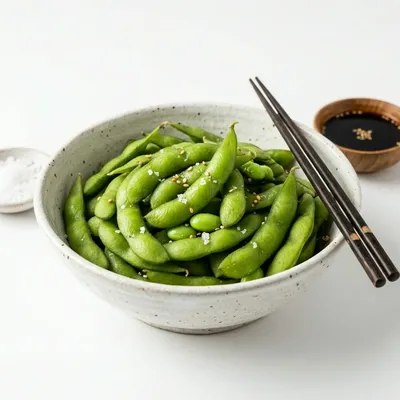
Edamame calories per 100g: 121 kcal
Nutrition Facts per 100g
Edamame nutrition: calories, complete soy protein, and net carbs
Shelled edamame has about 121 calories per 100g and nearly 12g of complete soy protein. It works well as a snack, salad topping, or plant-based protein side, but pods and restaurant servings can be hard to estimate. Scan the bowl with the CalMind photo calorie tracker to log the actual portion.
A standard 100-gram serving of shelled edamame contains approximately 121 calories. A defining hallmark of edamame is its 11.9 grams of protein per serving. Crucially, unlike the majority of plant proteins, edamame provides a "complete protein," meaning it contains all nine essential amino acids required for human muscle repair and structural maintenance.
Navigating Carbohydrates and Essential Fats
Beyond its protein content, edamame supplies 8.9 grams of total carbohydrates per 100g. More than 5 grams of this carbohydrate mass exists as dietary fiber. This fiber density slows digestion, supports stable blood sugar levels, and promotes gastric satiety.
Additionally, the 5.2 grams of fat found in edamame consists of polyunsaturated and monounsaturated lipids, including omega-3 fatty acids. These plant fats support cardiovascular health and assist in the absorption of fat-soluble vitamins.
🔥 How to burn 121 Calories (100g serving)?
- Run (6 mph pace): 12 minutes
- Cycle (Moderate effort): 17 minutes
- Walk (3.5 mph brisk pace): 30 minutes
- Rowing (Vigorous): 10 minutes
Note: Caloric expenditure varies based on age, gender, and current body weight.
Phytoestrogens and Isoflavones
A frequently discussed aspect of edamame is its concentration of organic compounds known as isoflavones, primarily genistein and daidzein. These plant-based chemicals are categorized as phytoestrogens, meaning their molecular structure resembles human estrogen. However, their biological behavior in the body is distinct. Rather than disrupting normal hormonal output, these isoflavones act as selective estrogen receptor modulators (SERMs).
In practical terms, the phytoestrogens in edamame can adapt to the body's biological needs. In environments with high estrogen levels, these compounds can bind to hormone receptors and block excess estrogen activity. Conversely, during post-menopausal phases when natural estrogen drops, these compounds can provide supportive estrogenic effects, such as mitigating hot flashes and helping preserve bone mineral density.
Essential Micronutrients: Folate and Vitamin K
Edamame serves as a rich source of essential trace micronutrients. For example, a single cup of prepared edamame delivers a significant portion of the recommended daily intake of dietary folate. This B-vitamin is required for cellular DNA synthesis and healthy red blood cell formation.
Furthermore, edamame provides Vitamin K1 (phylloquinone), a fat-soluble nutrient. Vitamin K is involved in the biological production of proteins required for blood coagulation and bone calcium metabolism. Because edamame contains its own healthy plant fats, the digestive tract can absorb this fat-soluble vitamin without requiring additional dietary oils.
Soybean Products: Nutrition Comparison (Per 100g)
*Note: Edamame retains substantially more water and functional carbohydrates than heavily compressed or fermented soy products.
Frequently Asked Questions
How many calories are in shelled edamame per 100g?
Shelled edamame has about 121 calories per 100g, with 11.9g protein, 8.9g carbs, and 5.2g fat.
Is edamame high in protein?
Yes. Edamame is a complete soy protein and provides more protein than many common vegetables.
Can you eat edamame on a low-carb diet?
Usually yes in moderate portions. Much of its carbohydrate comes with fiber, so the net-carb impact is lower.
Do you eat the edamame pod?
No. The pod is not toxic, but it is tough and fibrous; eat the beans inside after cooking.