
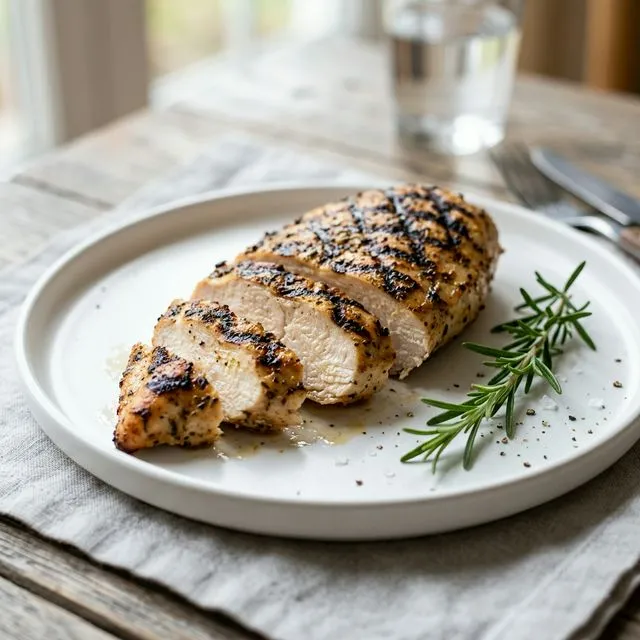
Chicken calories per 100g: 165 kcal
Nutrition Facts per 100g (Breast, Skinless, Grilled)
Chicken nutrition: breast, thigh, wing, drumstick, skin, and portions
Chicken calories change by cut, skin, and cooking method. Skinless chicken breast has about 165 calories and 31g protein per 100g, while thighs, wings, and fried chicken are higher because they carry more fat.
For meal prep, weight loss, or muscle gain, the main tracking problem is portion size. Using the CalMind photo calorie tracker, you can scan your chicken meal and see calorie ranges without tedious manual weighing.
Understanding the Breast: The Elite Protein Vehicle
The skinless chicken breast is widely hailed by nutritionists and athletes alike as the ultimate lean protein vehicle. A standard 100-gram serving (roughly 3.5 ounces) of raw, skinless chicken breast specifically delivers approximately 165 calories. Within this modest caloric footprint lies a spectacular 31 grams of highly bioavailable dietary protein, zero grams of carbohydrates, and a low 3.6 grams of total fat. This extraordinary protein-to-calorie ratio ensures that the majority of consumed energy is directed effectively toward muscle synthesis and cellular recovery.
Furthermore, because the breast is intensely lean, it effectively promotes a sustained feeling of gastric satiety. Consuming a robust 200-gram portion (yielding roughly 62 grams of protein) smoothly delays the onset of physiological hunger pangs, firmly preventing unplanned caloric snacking. However, its low fat content makes the breast susceptible to moisture loss during standard cooking. Employing gentle, moist-heat preparation methods such as sous-vide, poaching, or timed baking ensures the muscle fibers remain pleasantly tender rather than rigid and dry.
Thighs, Wings, and Dark Meat Dynamics
Moving away from the lean breast, the dark meat of the chicken—specifically the thighs and drumsticks—introduces a distinctly different macronutrient dynamic. A standard 100-gram serving of skinless chicken thigh physically contains roughly 177 calories and 8.3 grams of fat, while the exact same weight with the external skin left intact jumps rapidly to 229 calories and a dense 15.5 grams of fat. This fat is heavily composed of highly beneficial monounsaturated fatty acids (MUFAs), similar to the specific lipid profiles naturally found in premium olive oil.
Primarily, the active dark meat fibers uniquely contain highly concentrated volumes of myoglobin—the specific oxygen-binding protein responsible for the meat's reddish-brown hue and significantly richer culinary flavor. Dark meat provides distinctly higher bioavailable levels of essential dietary iron, vital zinc, and powerful energy-regulating B-vitamins compared directly to white meat. For individuals adhering to highly structured low-carbohydrate dietary protocols, the naturally elevated fat content found in the chicken thigh effectively serves as a highly sustained ketogenic energy source.
🔥 How to burn 165 Calories (100g breast)?
- Run (6 mph pace): 16 minutes
- Cycle (Moderate effort): 24 minutes
- Walk (3.5 mph brisk pace): 44 minutes
- Rowing (Vigorous): 15 minutes
Note: Caloric expenditure varies based on age, gender, and current body weight.
The Profound Impact of Cooking Methodology
Perhaps the most critical variable dictating the final caloric load of any chicken dish rests upon the culinary preparation methodology employed. A pristine 100-gram skinless breast baked with simple dry herbs registers at roughly 165 calories. However, taking that exact same chicken breast, heavily dredging it in refined flour, and deep-frying it in vegetable oil fundamentally alters its composition. The porous flour crust acts as a physical sponge, soaking up massive volumes of frying oil.
Consequently, an identical 100-gram portion of commercially breaded fried chicken breast spikes to over 260 calories and nearly 15 grams of dietary fat, eliminating the primary lean advantages initially inherent to the cut. To safely preserve the lean nutritional profile while maximizing flavor, consistently rely on baking, open-flame grilling, or low-oil air-frying techniques.
Chicken Cuts: Nutrition Comparison (Cooked, Per 100g)
*Removing the skin significantly reduces total calories and fat density across all poultry pieces.
Frequently Asked Questions
Which chicken cut has the fewest calories?
Skinless chicken breast is the lowest common cut at about 165 calories per 100g. Removing the skin is the easiest way to reduce calories and fat.
How much protein is in 200g of chicken breast?
200g of grilled chicken breast has about 330 calories and 62g protein. It is a strong option for high-protein meal prep.
Should you rinse raw chicken before cooking it?
No. Rinsing raw chicken can spread bacteria around the sink and counter; proper cooking is what makes it safe.
Is rotisserie chicken healthy for weight loss?
Yes, especially if you remove the skin and choose leaner pieces. Track sauces, seasoning blends, and side dishes separately.
CalMind