 CalMind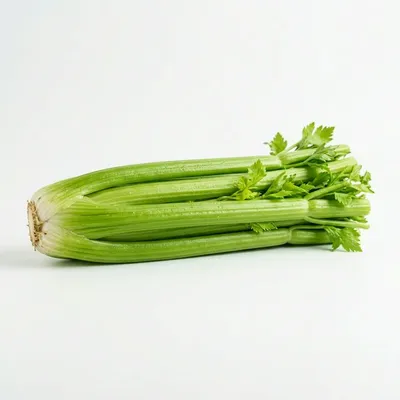
Celery calories per 100g: 14 kcal
Nutrition Facts per 100g
Celery nutrition: calories, stalks, juice, fiber, and dips
Celery (Apium graveolens) is widely recognized as a diet-friendly vegetable, cultivated since antiquity for culinary and medicinal purposes. From a caloric perspective, raw celery is notably sparse. A standard 100-gram serving contains just 14 calories, making it one of the lowest-calorie whole foods available. Celery stalks are composed of nearly 95% water bound within a matrix of cellulose dietary fiber. Consuming celery provides mechanical chewing satisfaction and gastric distension with minimal impact on daily caloric intake. Because weighing light vegetables can be tedious, simply snap a picture with the CalMind photo calorie tracker to log your exact portion in seconds.
Macronutrients and the "Negative Calorie" Myth
A 100-gram serving of raw celery contains exactly 3 grams of total carbohydrates. Of this, 1.6 grams is indigestible dietary fiber. This means the "net carbohydrates"—the sugars that elevate blood glucose and stimulate insulin release—are approximately 1.4 grams. The insoluble fiber in celery assists in the gastrointestinal tract, promoting digestive regularity and providing nourishment for the gut microbiome.
Celery is virtually devoid of dietary fat (0.2 grams) and provides a minimal 0.7 grams of plant protein. It is important to address the popular myth of "negative calories," which suggests that the body expends more energy chewing and digesting celery than the celery provides. While scientifically inaccurate—the thermic effect of food (TEF) does not completely offset the 14 calories—the net caloric yield is so low that it serves as an excellent low-calorie option for those tracking macros.
Phytonutrients: Apigenin and Luteolin
Beyond its water content, celery contains biologically active antioxidant flavonoid compounds, most notably apigenin and luteolin. These molecules have been studied for their ability to downregulate chronic cellular inflammation.
Apigenin acts as a neuroprotective agent. Neurological research suggests that apigenin may stimulate neurogenesis (the synthesis of new brain cells) and protect existing nerve fibers against oxidative free radical damage. Similarly, luteolin helps suppress cellular inflammation within the central nervous system, potentially lowering the statistical risk of neurodegenerative diseases over a lifespan.
🔥 How to burn 14 Calories (100g serving)?
- Run (6 mph pace): 1 minute
- Cycle (Moderate effort): 2 minutes
- Walk (3.5 mph brisk pace): 3 minutes
- Rowing (Vigorous): 1 minute
Note: Caloric expenditure varies based on age, gender, and current body weight.
Raw celery, juice, and common U.S. snacks
The 14-calorie reference applies to 100 grams of raw celery. A single stalk is not a fixed weight, so weigh the edible portion when you need more than a rough estimate.
Celery juice is a separate food because juicing changes the serving and removes much of the solid material. Use a juice-specific source or calculate the amount of celery used rather than copying the raw-stalk value.
For celery with peanut butter, cream cheese, ranch, or buffalo-chicken dip, record the topping separately. This page does not present celery as a treatment for dehydration, cramping, bone disease, or any other condition.
Low-Calorie Veggies: Nutrition Comparison (Raw, Per 100g)
*Celery is among the lowest-calorie whole foods naturally available.
Frequently Asked Questions
How many calories are in celery per 100g?
Raw celery has about 14 calories per 100g, with 3g carbs and almost no fat.
Is celery good for weight loss?
Yes. Celery is very low calorie, but dips like peanut butter, ranch, or cream cheese add most of the calories.
Is celery juice better than whole celery?
No for fullness. Celery juice removes much of the fiber, while whole celery keeps the crunch and volume.
Does celery have negative calories?
No. Celery is very low in calories, but it still contributes calories and should be counted if portions are large.
Sources, U.S. scope, and fact check
Reference item: USDA FoodData Central, “Celery, raw” (FDC ID 169988). The 14 kcal per 100g reference excludes dips, nut butter, dressing, and cooking fat.
Applicable region: U.S. food-composition reference data. Last fact check: July 24, 2026. Stalk size and edible weight vary; celery is not a “negative-calorie” food.
Editorial information
Written and edited by
Editor-in-Chief at CalMind. Leads editorial direction and English-language nutrition content.
Editorial disclosure added July 17, 2026. This page is not labeled as professionally reviewed unless a named reviewer and verifiable credential are shown.