 CalMind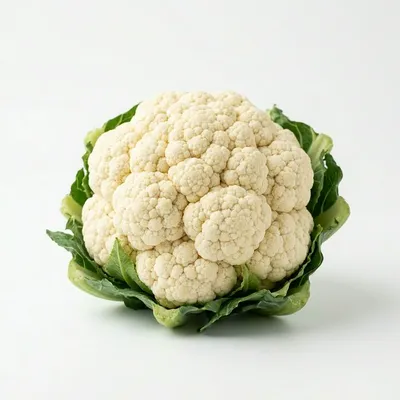
Cauliflower calories per 100g: 25 kcal
Nutrition Facts per 100g
Cauliflower nutrition: calories, cauliflower rice, and low-carb swaps
Cauliflower (Brassica oleracea var. botrytis) is a versatile cruciferous vegetable widely used as a low-carbohydrate culinary substitute. From a weight management and macronutrient tracking perspective, raw cauliflower is a valuable nutritional asset. A standard 100-gram serving contains just 25 calories. Its low caloric density, firm cellular structure, and neutral flavor allow it to serve as a low-calorie alternative to dense carbohydrates such as white rice, mashed potatoes, and pizza crusts. To seamlessly log your meals, the CalMind photo calorie tracker lets you scan a bowl of cauliflower rice for precise nutrition data.
Macronutrients: Fiber and Minimal Carbohydrates
A 100-gram serving of raw cauliflower contains exactly 5 grams of total carbohydrates. However, 2 grams of that total consists of dietary fiber. This means the "net carbohydrates"—the sugars and starches that impact blood glucose—sit at a low 3 grams. The insoluble fiber promotes digestive regularity and supports the gut microbiome.
Standard cauliflower is nearly devoid of dietary fat, with 0.3 grams per serving, and provides 1.9 grams of plant protein. Its lack of energy-dense macronutrients allows it to serve as a high-volume food. Consuming larger portions of cauliflower rice or roasted cauliflower steaks provides satiety without significantly impacting daily caloric intake.
Antioxidants: Vitamin C and Glucosinolates
A standard 100-gram serving of cauliflower provides a substantial amount of Vitamin C (Ascorbic Acid), supplying roughly 75% to 80% of the recommended daily intake. This water-soluble vitamin is necessary for collagen synthesis and immune system function.
As a cruciferous vegetable, cauliflower is rich in sulfur-containing compounds called glucosinolates. During digestion, these convert into isothiocyanates. Research indicates these molecules may help regulate cellular inflammation and support cellular detoxification pathways.
🔥 How to burn 25 Calories (100g serving)?
- Run (6 mph pace): 2 minutes
- Cycle (Moderate effort): 3 minutes
- Walk (3.5 mph brisk pace): 6 minutes
- Jumping Rope: 2 minutes
Note: Caloric expenditure varies based on age, gender, and current body weight.
Optimization: Cooking Protocols and Nutrient Preservation
Cooking cauliflower alters its texture and flavor profile. However, prolonged boiling can degrade heat-sensitive micronutrients, significantly reducing its Vitamin C content and affecting the enzymes required to synthesize isothiocyanates.
Steaming, fast stir-frying, or roasting at high heat (roughly 425°F or 220°C) tenderizes the vegetable while better preserving its micronutrient profile. High-heat roasting initiates the Maillard reaction, caramelizing natural sugars and enriching its flavor.
Folate and B-Vitamin Complex
Cauliflower is a natural source of dietary Folate (Vitamin B9). Folate is essential for DNA synthesis and cellular division, and its adequate intake is critical during pregnancy to prevent neural tube defects.
Cauliflower also delivers a spectrum of B-complex vitamins, including Pantothenic Acid (Vitamin B5) and Pyridoxine (Vitamin B6). These vitamins act as coenzymes in cellular metabolism, facilitating the conversion of macronutrients into energy.
Cruciferous Vegetables: Nutrition Comparison (Raw, Per 100g)
*Cauliflower provides an incredibly functional low-carb alternative to heavy starches.
Frequently Asked Questions
How many calories are in cauliflower per 100g?
Raw cauliflower has about 25 calories per 100g, with 5g carbs and 1.9g protein.
Is cauliflower good for weight loss?
Yes. It is low in calories, high in volume, and works well as a lower-calorie swap for rice or potatoes.
Is cauliflower rice lower in calories than white rice?
Yes. Cauliflower rice has about 25 calories per 100g, while cooked white rice is often around 130 calories per 100g.
Does cooking cauliflower change calories?
Plain cooked cauliflower stays low calorie. Oil, cheese sauce, or butter are what usually raise the total.