 CalMind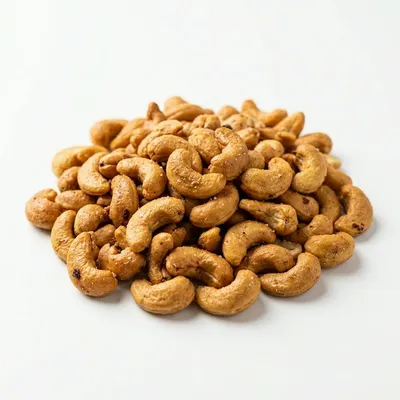
Cashews calories per 100g: 553 kcal
Nutrition Facts per 100g
Cashews nutrition: calories, fat, protein, and portion control
Cashews (Anacardium occidentale) are universally beloved worldwide for their rich, buttery flavor and creamy texture. Scientifically, cashews are not true nuts; they are the hearty seeds that grow attached to the bottom of the cashew apple, a fruit native to Brazil. From a caloric and macronutrient tracking perspective, cashews demand precise dietary respect and rigorous portion control. A 100-gram serving registers 553 calories. Because they are physically small yet energy-dense, mindlessly snacking on unmeasured handfuls can quickly derail a caloric deficit. If your goal is sustainable fat loss, you should utilize a digital food scale to properly weigh out precise 15-gram or 30-gram serving sizes. To eliminate the guesswork from snacking, use the CalMind photo calorie tracker to snap a photo of your cashews; the AI seamlessly scans the volume and delivers precise calorie and fat data.
Understanding the Heart-Healthy Fats
The vast majority of the caloric density in cashews comes from their dietary fat content, which clocks in at 43.8 grams per 100-gram serving. However, unlike processed trans fats or saturated animal lipids, the complex fat profile within the cashew seed is exceptional. Composed primarily of beneficial monounsaturated fatty acids (specifically oleic acid, identical to that found in olive oil), these lipids are highly championed by modern cardiology.
Clinical consumption of these monounsaturated fats is correlated with reducing LDL ("bad") cholesterol while preserving or elevating protective HDL ("good") cholesterol. This cardiovascular lipid exchange lowers your overall risk of coronary heart disease, strokes, and atherosclerosis. These healthy fats also act as lubricating agents for joints and provide sustained fuel for athletic endurance.
Protein, Carbohydrates, and Dietary Fiber
Cashews successfully provide a robust 18.2 grams of essential plant-based complete protein per 100 grams. While insufficient as a primary source of daily protein for synthesizing muscle when compared to lean meats, this plant protein concentration plays a critical physiological role. It slows gastric emptying, promoting a sustained feeling of fullness and satiety that prevents mid-afternoon sugar cravings.
Compared to other popular tree nuts like walnuts, macadamias, or almonds, cashews contain higher total carbohydrates, registering at roughly 30.2 grams per 100-gram serving. While this imparts their signature natural sweetness, individuals on highly restrictive ketogenic diets must monitor their intake. Fortunately, roughly 3.3 grams of this carbohydrate count is dietary fiber. This vital fiber assists in maintaining gastrointestinal regularity, blunting insulin spikes, and nourishing the symbiotic bacterial colonies within your digestive tract.
The Mineral Powerhouse: Copper, Magnesium, and Zinc
The nutritional value of cashews transcends their macronutrient ratios. Cashews are a supreme biological powerhouse of essential dietary trace minerals. Most notably, they are one of the most concentrated natural whole-food sources of dietary copper available. Copper is required for the proper synthesis of hemoglobin (ensuring flawless oxygen transport throughout the circulatory system), protecting myelin sheaths surrounding sensitive nerve fibers, and driving the production of structural skin collagen.
🔥 How to burn 553 Calories (100g serving)?
- Run (6 mph pace): 55 minutes
- Cycle (Moderate effort): 79 minutes
- Walk (3.5 mph brisk pace): 138 minutes
- Swimming (Freestyle): 45 minutes
Note: Caloric expenditure varies based on age, gender, and current body weight.
Furthermore, cashews deliver high amounts of magnesium (essential for optimal nerve transmission and relaxing tense skeletal muscles) and dietary zinc. Zinc is vital for maintaining a robust internal immune system capable of destroying viral pathogens and naturally healing physical skin wounds. This profound multi-mineral complex renders the cashew an invaluable daily nutritional asset.
Bone Density and Vitamin K Synergy
While dairy products often dominate conversations regarding optimal bone health, cashews represent a powerful complementary botanical asset. Beyond their concentrations of fundamental metabolic copper and magnesium, properly roasted cashews simultaneously deliver critical quantities of Vitamin K. This fat-soluble nutrient is responsible for rigorously binding circulating dietary calcium directly into the physical matrix of your skeleton.
Without adequate Vitamin K to act as a biological anchor, excess dietary calcium can dangerously calcify soft arterial tissues, leading directly to severe cardiovascular complications. By introducing properly measured portions of raw or dry-roasted cashews into your diet, you efficiently safeguard your skeletal density while protecting your vascular system from calcium-induced damage.
The Truth About "Raw" Cashews
One of the most fascinating secrets of the global commercial nut industry is that genuinely unheated raw cashews are exceptionally dangerous. The authentic, intact natural cashew shell contains an intensely toxic chemical resin mathematically structurally identical to the urushiol found inside poison ivy.
Attempting to bite directly through a genuinely raw cashew shell would instantly trigger massive chemical burns throughout your oral cavity and digestive tract. Therefore, every individual cashew legally sold commercially as "raw" has actually undergone a rigorous, specialized high-temperature steam bath explicitly designed to permanently destroy the toxic resin while carefully maintaining the seed's nutritional integrity.
Popular Nuts: Nutrition Comparison (Raw, Per 100g)
*Cashews are significantly lower in total fat than most tree nuts.
Frequently Asked Questions
How many calories are in cashews per 100g?
Cashews have about 553 calories per 100g, with 18.2g protein, 30.2g carbs, and 43.8g fat.
Can cashews cause weight gain?
They can if portions are unmeasured. Cashews are calorie-dense, so a small handful is easier to fit than eating from the bag.
Are roasted cashews higher in calories?
Oil-roasted cashews can be higher in calories than raw or dry-roasted cashews because added oil increases fat.
Are salted cashews healthy?
Salted cashews have similar calories but more sodium. Choose unsalted or lightly salted if you track sodium.