 CalMind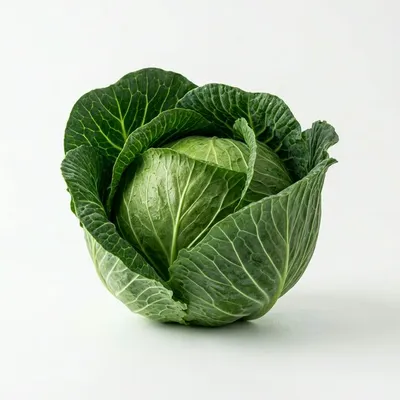
Cabbage calories per 100g: 25 kcal
Nutrition Facts per 100g
Cabbage nutrition: raw calories, cooked cabbage, and slaw toppings
Cabbage (Brassica oleracea var. capitata) is a robust and widely cultivated vegetable. Belonging to the cruciferous family—alongside broccoli, cauliflower, and Brussels sprouts—cabbage has served as a foundational food source for thousands of years. From a nutritional perspective, raw green cabbage is an efficient option. A standard 100-gram serving delivers 25 calories, making it a low-calorie, high-volume food. Because cabbage is dense, high in water content, and packed with dietary fiber, it allows for portion sizes that provide satiety while keeping caloric intake manageable. If you want to log shredded cabbage without a scale, let the CalMind photo calorie tracker estimate the volume and provide precise dietary data.
Macronutrients: Superior Dietary Fiber and Minimal Sugars
A 100-gram serving of raw cabbage contains 5.8 grams of total carbohydrates. A significant 2.5 grams of that total exists as dietary fiber. This means the "net carbohydrates" sit at a low 3.3 grams. This insoluble fiber matrix promotes digestive regularity, supports gut bacteria, and helps maintain stable blood sugar levels.
Beyond its carbohydrate profile, cabbage is low in dietary fat (0.1 grams per serving) and provides a modest 1.3 grams of plant protein. While it is not a primary source of protein or fats, its low energy density allows you to consume large portions, generating satiety through mechanical gastric distension.
The Antioxidant Masterclass: Vitamin C and Glucosinolates
A standard 100-gram serving of cabbage provides 40 to 60% of your recommended daily intake of Vitamin C (Ascorbic Acid). This water-soluble antioxidant is necessary for the biological synthesis of structural collagen and is vital for maintaining an effective immune system.
Furthermore, as a cruciferous vegetable, cabbage is rich in sulfur-containing organocompounds called glucosinolates. When raw cabbage leaves are chopped or chewed, these glucosinolates undergo an enzymatic conversion into molecules known as isothiocyanates. These molecules have been studied for their ability to downregulate inflammation and trigger apoptosis in malignant cells.
🔥 How to burn 25 Calories (100g serving)?
- Run (6 mph pace): 2 minutes
- Cycle (Moderate effort): 3 minutes
- Walk (3.5 mph brisk pace): 6 minutes
- Jumping Rope: 2 minutes
Note: Caloric expenditure varies based on age, gender, and current body weight.
Fermentation: The Probiotic Power of Sauerkraut and Kimchi
Consuming fermented cabbage, such as Sauerkraut or Kimchi, offers additional health benefits. During lacto-fermentation, naturally occurring bacteria (specifically Lactobacillus) digest the cabbage sugars in an oxygen-free environment.
These fermented cabbage products are excellent sources of natural probiotics. Consuming unpasteurized sauerkraut or kimchi introduces beneficial living bacteria into your gut microbiome. This bacterial infusion improves digestive efficiency, helps regulate immune system responses, and increases the systemic absorption of the cabbage's Vitamin C and Vitamin K profile.
Vitamin K: Essential Blood and Bone Defense
Cabbage is a concentrated source of Vitamin K (specifically phylloquinone or K1). A standard 100-gram serving can deliver over 85% of your recommended daily requirement. Biologically, Vitamin K functions as the primary catalyst necessary for synthesizing blood-clotting proteins in the liver.
Clinical nutritional science has also linked Vitamin K levels to long-term skeletal integrity. It facilitates the binding of calcium to the bone matrix, supporting bone health. Incorporating chopped raw cabbage into your diet is an effective way to support both cardiovascular and skeletal systems.
The Culinary Versatility of "Cabbage Steaks"
While historically boiled, modern culinary techniques have popularized roasting cabbage. By slicing a head of green cabbage into 1-inch thick slabs, brushing them with olive oil, and roasting them at 425°F (220°C), the dietary chemistry and flavor profile are altered.
The dry heat triggers the Maillard reaction, caramelizing the natural cabbage sugars and creating a complex savory flavor profile. These "cabbage steaks" function as a low-calorie, high-volume base for lean proteins, allowing dieters to enjoy a satisfying meal with fewer calories than traditional carbohydrate bases.
Leafy Greens: Nutrition Comparison (Raw, Per 100g)
*Red cabbage offers significantly higher anthocyanin antioxidants.
Frequently Asked Questions
How many calories are in cabbage per 100g?
Raw cabbage has about 25 calories per 100g, with 5.8g carbs and almost no fat.
Is cabbage good for weight loss?
Yes. Cabbage is low in calories and high in volume, but creamy slaw dressings can add many calories.
Is red cabbage different from green cabbage?
Calories are similar, but red cabbage adds anthocyanin antioxidants and often more vitamin C.
Does cooking cabbage change calories?
Plain cooked cabbage stays low calorie. Oil, butter, bacon, or sauce are usually what raise the total.