
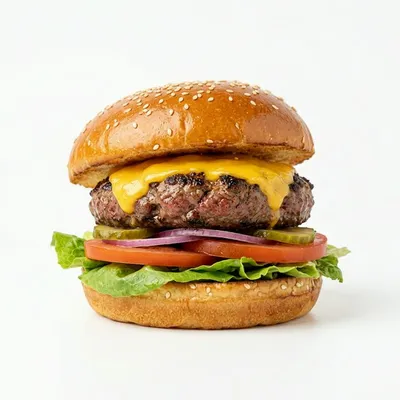
AI Scan of Calories in Burger

Calories in Burger: AI Macro Tracker

Nutrition Facts per Standard Cheeseburger (150g)

354Calories
17gProtein
33gCarbs
16gFat

Burger Nutrition Analysis: Deconstructing an American Classic

The hamburger is arguably the single most iconic, globally recognized staple of American culinary culture. Whether served swiftly at a massive drive-thru chain, meticulously crafted at a high-end gourmet steakhouse, or aggressively flame-grilled in a backyard during a summer barbecue, the burger holds universal appeal. However, within the modern landscape of clinical nutrition and fitness, burgers are almost universally categorized as quintessential "junk food." To separate the absolute truth from deeply ingrained dietary dogma, we must systematically deconstruct the burger into its fundamental structural components. A completely standard, fast-food style cheeseburger (weighing approximately 150 grams) typically contains around 354 calories. While this caloric density is undeniably significant, a burger is fundamentally a potent vehicle for high-quality animal protein, making it far more biologically valuable than "empty calorie" foods like pure sugar or highly refined pastries.

Macronutrients: The Essential Protein and Fat Ratio

At its absolute structural core, the nutritional value of a hamburger is dictated entirely by the specific quality and fat percentage of the ground beef patty. A standard 150-gram fast-food cheeseburger delivers approximately 17 to 20 grams of completely bioavailable, high-quality animal protein. This complete protein contains every single essential amino acid required by the human body to successfully synthesize new muscle tissue, rigorously repair damaged cellular structures, and actively produce vital metabolic hormones and enzymes.

Simultaneously, that same burger typically supplies roughly 16 to 18 grams of dietary fat. A significant percentage of this fat exists strictly in the form of saturated fat, naturally occurring within the beef and explicitly added via the melted cheese slice. While dietary saturated fats are actively required for the optimal biological production of critical hormones (such as testosterone), consuming them in absolutely massive, uncontrolled quantities (e.g., eating regular triple-patty bacon cheeseburgers) can aggressively elevate systemic LDL cholesterol levels and significantly increase long-term cardiovascular risk factors. The final macronutrient pillar—carbohydrates—comes almost exclusively from the highly refined white flour hamburger bun, typically contributing around 33 grams of rapidly digesting, low-fiber carbs that quickly spike circulatory blood glucose.

Micronutrients: The Iron and B-Vitamin Advantage

Despite their negative public reputation, hamburgers offer highly significant, tangible micronutrient benefits, drawn almost entirely from the red meat patty. Beef is universally recognized as one of the most spectacularly dense, highly bioavailable sources of Heme Iron on the planet. Unlike the non-heme iron found strictly in plants (like spinach or beans), the heme iron found in a burger patty is exponentially easier for the human intestinal tract to successfully absorb and instantly utilize. This iron is absolutely critical for the biological synthesis of hemoglobin, the specific protein actively responsible for aggressively transporting oxygen through your bloodstream. For individuals prone to chronic anemia, occasionally incorporating a lean beef burger can actually represent a highly effective nutritional strategy.

Furthermore, beef is phenomenally rich in essential B-Vitamins, most notably Vitamin B12 (Cobalamin). Vitamin B12 is incredibly unique because it is exclusively found naturally in animal products; it is physically impossible to obtain naturally from plants. This critical vitamin is entirely responsible for actively maintaining the health of your complex neurological system and facilitating massive red blood cell production. A single, high-quality beef patty can frequently fulfill 100% of your total daily required B12 intake.

🔥 How to burn 354 Calories (1 standard cheeseburger)?

  • Run (6 mph pace): 35 minutes
  • Cycle (Moderate effort): 50 minutes
  • Walk (3.5 mph brisk pace): 95 minutes
  • Rowing (Vigorous): 30 minutes

Note: Caloric expenditure varies based on age, gender, and current body weight.

The Danger Zone: Hidden Calories and Sauces

The true, absolute danger of burger consumption rarely stems directly from the beef itself; rather, it originates entirely from the massive, frequently hidden influx of auxiliary calories. A standard beef patty and a plain bun might total 300 calories. However, once you generously apply thick layers of mayonnaise, extremely sugary ketchup, multiple slices of aggressive, high-fat processed cheese, and aggressively salty bacon strips, that same burger can instantaneously rocket past 800 to 1,000 calories. Furthermore, these massive, hidden calories are almost exclusively composed of heavily refined sugars and intensely inflammatory seed oils found deeply embedded within commercial sauces. To brilliantly optimize a burger for a health-conscious diet, you must actively eliminate the mayonnaise, strictly limit the cheese, and aggressively substitute high-calorie sauces with sharp mustard or highly flavorful, zero-calorie hot sauce.

The Hidden Threat of Commercial Fast-Food Buns

While society violently demonizes the high fat content of the beef patty itself, the true hidden metabolic disaster of a fast-food burger often lies entirely within the engineered commercial bun. To guarantee a miraculously long shelf life and an incredibly soft, uniformly pillowy texture that perfectly resists dissolving under heavy sauces, mega-corporations aggressively load their industrial buns with high-fructose corn syrup, artificial dough conditioners, and heavily refined soybean oils. A generic fast-food hamburger bun alone can efficiently deliver up to 160 calories composed entirely of highly processed, instantly digesting starches that offer absolutely zero mechanical satiety.

This aggressive influx of hyper-refined carbohydrates instantly triggers a catastrophic surge in blood glucose, prompting the pancreas to overproduce insulin. When this massive insulin spike intimately combines with the dense dietary fats actively digesting from the beef patty, the human body is physiologically forced into an incredibly aggressive fat-storage state. Swapping the commercial white-flour bun for a genuine, thick-cut whole grain alternative, or brilliantly eliminating it entirely in favor of a crisp iceberg lettuce wrap, fundamentally disrupts this dangerous metabolic cycle and completely stabilizes your post-meal energy levels. To easily navigate complex fast-food meals and track hidden carbs, try the CalMind photo calorie tracker. Just snap a photo of your burger, and our AI will instantly estimate the patty size, bun type, and total calorific load to help you stay safely in a deficit.

Navigating the Burger Joint Sidedish Trap

It is exceptionally rare for individuals to consume a hamburger entirely in isolation. The deeply ingrained cultural expectation is to constantly pair the burger with a massive, overflowing side of deep-fried potatoes and a towering, biologically disastrous cup of hyper-sweetened liquid soda. This deadly, highly profitable "combo meal" structural design frequently guarantees that a relatively modest 400-calorie single cheeseburger instantaneously metastasizes into an apocalyptic 1,500-calorie dietary nightmare.

A standard medium order of restaurant French fries aggressively introduces over 360 calories of pure starch heavily saturated in inflammatory hydrogenated frying oils, while a medium soda injects an additional 210 completely empty sugar calories. To aggressively defend your hard-earned weight loss progress without sacrificing the psychological joy of a weekend burger, the most critical tactical maneuver you can execute is ordering the burger entirely á la carte. Pairing your cheeseburger with a large ice water and a side salad dressed with sharp vinaigrette instantly slashes your total meal calories by more than 50% while violently increasing total dietary volume and essential micronutrient density.

Frequently Asked Questions

Are keto-friendly, "bunless" burgers significantly healthier?

For individuals actively attempting to rigorously execute weight loss, a bunless (lettuce-wrapped) burger is frequently a vastly superior choice. By physically eliminating the standard refined white-flour bun, you instantly eradicate 130 to 160 calories and completely remove roughly 25 to 30 grams of highly glycemic carbohydrates. This brilliant substitution transforms the burger from a rapidly digesting, blood-sugar-spiking meal into a highly satiating, strictly protein-and-fat dominant dish that violently sustains energy levels and perfectly aligns with highly strict ketogenic or intensely low-carb dietary protocols.

Is choosing a ground turkey burger always better for weight loss than beef?

Not automatically; this profoundly depends entirely on the specific leanness percentage of the meat in question. A standard, heavily processed commercial turkey burger is frequently ground using dark meat and excess skin, meaning it can easily contain the exact same caloric density and saturated fat profile as a standard 80/20 beef patty. To genuinely observe a prominent caloric reduction, you must actively verify you are purchasing explicitly labeled "93/7" or "99/1" extra-lean ground turkey. However, it is fundamentally crucial to remember that ultra-lean turkey notoriously cooks incredibly dry, whereas extra-lean 90/10 beef remarkably retains significantly more moisture and delivers vastly superior iron and zinc content.

Can I successfully eat hamburgers while aggressively dieting?

Yes, absolutely, provided you actively employ strict, intelligent ingredient moderation. The proven secret to heavily incorporating burgers into a highly restrictive diet is actively controlling the devastating "add-ons." Explicitly request a single, high-quality patty instead of a massive double or triple; aggressively substitute the intensely caloric mayonnaise for spicy mustard; actively ask for a lettuce wrap or a thin whole-wheat bun; and entirely skip the standard deep-fried French fries, replacing them directly with a crisp side salad. Executed brilliantly, a deliberately customized burger can absolutely function as a magnificent, highly satiating protein anchor within a remarkably successful fat-loss phase.

How many calories does adding a slice of cheese actually add to my burger?

A single, standard slice of processed American cheese or mild cheddar typically adds between 70 and 100 heavily fat-dense calories to your burger. While this may initially seem deeply insignificant, aggressively stacking two or three slices on a double cheeseburger instantly introduces an additional 200 to 300 calories entirely derived from dietary fats. If your explicit goal is maximum caloric restriction, removing the cheese is one of the fastest, most effective architectural changes you can make to any restaurant burger.

Are plant-based 'impossible' burgers genuinely lower in calories than real beef?

Surprisingly, no. Modern, highly processed plant-based meat alternatives are scientifically engineered to perfectly mimic the exact taste, texture, and 'bleed' of real beef, which completely requires mimicking its aggressive fat content. A standard 4-ounce plant-based patty frequently contains roughly 250 to 280 calories, which is completely identical to—and occasionally even slightly higher than—an equivalent 80/20 lean beef patty. However, they do offer an entirely cholesterol-free profile and frequently incorporate additional dietary fiber.

Snap a photo. See calories & macros.

Start with one photo. CalMind instantly shows calories and macros—so staying consistent feels easy.