
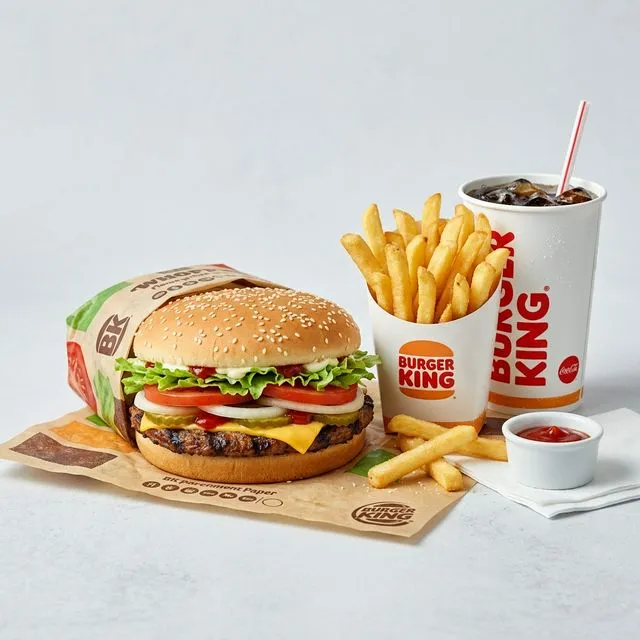
Burger King calories and nutrition calculator
Nutrition Facts per Whopper
Track Burger King Nutrition Instantly with AI
Founded in 1954 and known as the "Home of the Whopper," Burger King is one of the largest fast-food burger chains globally. Recognized for its flame-grilled cooking technique, the Burger King menu features calorie-dense beef burgers, fried chicken options, and high-fat side dishes. Navigating this menu while maintaining a calorie deficit requires a clear understanding of the macronutrient breakdown of their core items. With the CalMind photo calorie tracker, you can easily monitor your intake by taking a picture of your meal, allowing the AI to analyze the calories and macros instantly.
The Signature Whopper: Deconstructing the Calories
The Whopper is the flagship item on the Burger King menu. A standard, single-patty Whopper contains approximately 670 calories. It provides 28 grams of protein, 49 grams of carbohydrates (primarily from the sesame seed bun), and 40 grams of fat. Of that fat, 11 grams are saturated fat, representing roughly 55% of the recommended daily limit for an adult.
Burger King: Nutrition Comparison (Per Standard Serving)
*Removing Mayo on a Whopper instantly drops 160 calories.
The condiments on the Whopper significantly increase its caloric density. The standard application of mayonnaise contributes roughly 160 calories and 18 grams of fat. Requesting the Whopper without mayonnaise reduces the total caloric content to 510 calories, improving the protein-to-calorie ratio while maintaining the core flavor.
Chicken Options: Sandwiches vs. Fries
Burger King offers several chicken options, including the Original Chicken Sandwich and Chicken Fries. The Original Chicken Sandwich, which features an elongated, breaded, and deep-fried chicken patty with mayonnaise on a hoagie bun, contains 680 calories and 38 grams of fat. Despite being poultry, it carries a higher caloric load than a standard beef Whopper.
By contrast, the 9-piece Chicken Fries offer a more balanced macronutrient profile. A standard 9-piece serving contains roughly 280 calories, providing 13 grams of protein and 17 grams of fat. Without the addition of a high-calorie bun or heavy sauces, Chicken Fries are a more efficient protein option, provided they are not consumed with high-calorie dipping sauces like ranch or barbecue.
🔥 How to burn 670 Calories (1 Standard Whopper)?
- Run (6 mph pace): 68 minutes
- Cycle (Moderate effort): 95 minutes
- Walk (3.5 mph brisk pace): 180 minutes
- Swimming (Freestyle): 55 minutes
Note: Caloric expenditure varies based on age, gender, and current body weight.
The Combo Meal and Sodium Considerations
Upgrading a sandwich to a "Medium Value Meal" substantially increases the total caloric intake. While a modified 510-calorie Whopper (no mayo) can fit within a balanced diet, adding a medium order of French fries introduces an additional 430 calories and 19 grams of fat. Combining this with a medium non-diet cola (roughly 250 calories) raises the total meal to approximately 1,190 calories, which constitutes a significant portion of an average adult’s daily caloric needs.
The sodium content across the Burger King menu is also a critical dietary consideration. For example, a standard Bacon King sandwich contains 2,150 milligrams of sodium, which approaches the American Heart Association's recommended daily maximum limit of 2,300 milligrams. High sodium consumption can lead to temporary water retention and may elevate blood pressure in sensitive individuals.
Side Dishes: Evaluating Alternatives
Side dishes at fast-food restaurants often contribute heavily to the meal's caloric load. For example, Burger King's Onion Rings are sometimes viewed as a lighter alternative to French fries. However, a medium order of Onion Rings contains roughly 410 calories and 21 grams of fat. The breading absorbs significant amounts of cooking oil during the frying process, making them a high-calorie side option.
The Deceptive Sides Tax
How choosing "alternatives" actually ruins your daily macros.
The side garden salad can also increase caloric intake depending on the dressing used. While the greens contain negligible calories, a standard packet of Ken's Ranch Dressing adds nearly 260 calories and a significant amount of fat. To minimize caloric intake, it is advisable to use lighter dressings or consume the salad plain, pairing it with water or black coffee instead of caloric beverages.
The Impact of Sugar-Sweetened Beverages
Fountain beverages are a major source of liquid calories in fast-food meals. A large (40-ounce) Coca-Cola delivers roughly 380 calories and 100 grams of sugar. These liquid calories do not trigger the same mechanical satiety signals as solid food, making it easy to consume a caloric surplus.
The rapid intake of refined sugar causes a spike in blood glucose and insulin levels, which is often followed by a rapid decline, or "crash." This fluctuation can stimulate artificial hunger signals, prompting further caloric consumption. Replacing sugar-sweetened beverages with water, diet soda, or unsweetened tea is an effective strategy for reducing total meal calories.
Frequently Asked Questions
Are there low-calorie meals at Burger King?
Yes. A plain hamburger is about 250 calories, and skipping fries or using a light side keeps the meal lower.
How many calories are in a Burger King Whopper Jr.?
A Whopper Jr. is about 330 calories. Ordering it without mayonnaise can reduce the total.
Is the Impossible Whopper lower in calories than a regular Whopper?
No. The Impossible Whopper is close to a regular Whopper in calories, so treat it as a plant-based swap rather than a low-calorie choice.
Is Burger King breakfast suitable for weight loss?
It can be calorie-dense. Choose smaller sandwiches and avoid sausage, croissants, hash browns, or sugary drinks when cutting calories.
CalMind