 CalMind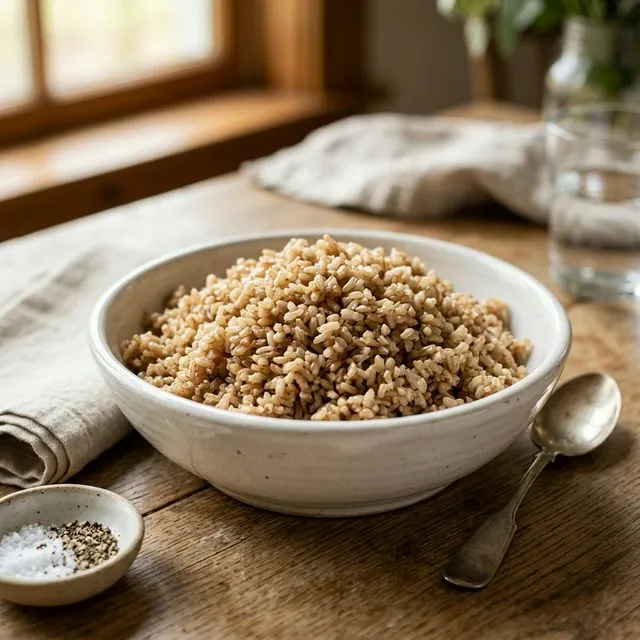
Brown rice calories per 100g: 112 kcal cooked
Nutrition Facts per 100g (Cooked)
Brown rice nutrition: cooked calories, fiber, and portions
Brown rice (Oryza sativa) is a widely recognized, nutrient-dense whole grain staple. Unlike refined white rice, brown rice retains its outer bran layer and nutrient-dense germ. This lack of milling preserves its chewy texture, nutty flavor, and nutritional profile. A standard 100-gram serving of boiled, fully cooked brown rice (weighed after cooking, without added oils or butter) yields approximately 112 calories. It is satiating and packed with complex carbohydrates, serving as an effective dietary foundation for athletes and those pursuing weight management. Because portion sizes for cooked rice can be difficult to estimate by eye, utilizing the CalMind photo calorie tracker allows you to scan your bowl directly and instantly determine its carb and calorie content.
Macronutrients: Complex Carbohydrates and Dietary Fiber
Brown rice is a reliable source of complex carbohydrates. A 100-gram serving of cooked brown rice delivers roughly 24 grams of total carbohydrates. Notably, 1.8 to 2.0 grams of this consists of dietary fiber, compared to the 0.4 grams typically found in an equivalent serving of white rice. This means the net carbohydrates sit at roughly 22 grams per serving.
The higher fiber content acts as a buffer in the digestive tract, slowing the metabolic breakdown of starches into glucose. As a result, brown rice has a lower Glycemic Index (GI) of approximately 50, compared to white rice which can reach 73 or higher. This steady release of glucose helps prevent rapid blood sugar fluctuations, making brown rice a recommended option for individuals managing energy levels or insulin resistance.
Brown rice also serves as a plant-based protein source, providing approximately 2.3 grams per 100g serving. While rice protein is categorized as "incomplete" because it lacks sufficient lysine, combining it with legumes—such as black beans, lentils, or chickpeas—forms a complete amino acid profile.
Phytonutrients and Minerals: Manganese and Selenium
The nutritional value of brown rice is concentrated in its bran and germ layers, which are rich in micronutrients and trace minerals. A standard one-cup serving of fully cooked brown rice (approximately 195 grams) delivers 88% of the daily recommended intake for Manganese. Manganese is a trace mineral utilized by the body to synthesize antioxidant enzymes, metabolize cholesterol, and form cartilage and bone.
Brown rice is also a significant source of Selenium, supplying roughly 27% of the daily requirement per cup. Selenium is a trace mineral that supports thyroid gland function, bolsters the immune system, and aids in repairing cellular DNA. The intact germ is additionally rich in B-Vitamins—specifically Niacin (Vitamin B3), Thiamin (Vitamin B1), and Pyridoxine (Vitamin B6)—which are necessary for converting dietary macronutrients into cellular energy (ATP).
🔥 How to burn 112 Calories (100g serving)?
- Run (6 mph pace): 11 minutes
- Cycle (Moderate effort): 15 minutes
- Walk (3.5 mph brisk pace): 28 minutes
- Rowing (Moderate): 13 minutes
Note: Caloric expenditure varies based on age, gender, and current body weight.
Proper Preparation: Mitigating Phytic Acid and Arsenic
Brown rice contains two naturally occurring compounds that require careful culinary preparation: phytic acid and arsenic. Because the bran layer remains intact, brown rice inherently contains higher levels of phytic acid, an antinutrient that binds to minerals like zinc and iron in the digestive tract, reducing their absorption.
Additionally, because rice is grown in flooded water paddies, it absorbs more naturally occurring arsenic from the soil than other crops, which accumulates in the outer bran layer. To mitigate these issues, nutritional science recommends employing the "pasta method" of cooking. Boiling brown rice in an excess of fresh water (using a 6-to-1 water-to-rice ratio) and draining the excess water at the end can remove up to 60% of the inorganic arsenic and neutralize a portion of the phytic acid.
Supporting the Microbiome
Brown rice serves as a prebiotic food source that supports the gut microbiome. The insoluble dietary fiber embedded within the bran layer resists digestion as it travels through the small intestine. Upon reaching the large intestine, it acts as a fermentable fuel for symbiotic gut bacteria.
These bacteria ferment the rice bran and produce Short-Chain Fatty Acids (SCFAs), notably butyrate. Butyrate is an anti-inflammatory molecule that serves as a primary energy source for the cells lining the colon. Sustaining butyrate production via whole-grain carbohydrate intake reinforces the intestinal barrier, mutes inflammation, and supports colon health.
Lignans and Hormonal Balance
Brown rice is also a dietary source of lignans, a sub-class of plant polyphenols. When ingested, specialized gut bacteria metabolize these into mammalian lignans known as enterolactone and enterodiol. These molecules circulate in the bloodstream and have a mild estrogenic effect.
In individuals with low estrogen levels, these mammalian lignans can provide a gentle estrogenic effect that helps defend against bone density loss. In pre-menopausal women with higher estrogen levels, these plant lignans can bind to estrogen receptors, blocking stronger endogenous estrogens from over-stimulating tissues. This biological moderation may lower the long-term risk of developing hormone-dependent conditions.
Rice Varieties: Nutrition Comparison (Cooked, Per 100g)
*Brown rice offers superior micronutrients compared to refined white rice.
Frequently Asked Questions
How many calories are in cooked brown rice per 100g?
Cooked brown rice has about 112 calories per 100g, with 24g carbs and 2.3g protein.
Is brown rice better than white rice?
Brown rice has more fiber and minerals, while white rice digests faster and may be easier around workouts.
Should you weigh brown rice raw or cooked?
Use the matching entry. Dry rice and cooked rice have very different calorie density because cooked rice absorbs water.
Can brown rice help with weight loss?
Yes, if portions are measured. Brown rice is filling, but large bowls can still push calories high.