
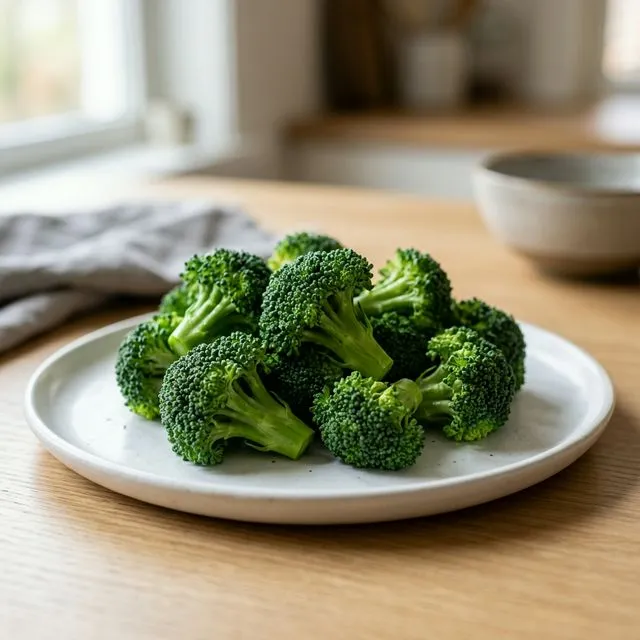
AI Scan of Calories in Broccoli

Broccoli calories per 100g: 34 kcal

Nutrition facts per 100g (raw broccoli)

34Calories
2.8gProtein
7gCarbs
0.4gFat

Broccoli nutrition: raw, cooked, net carbs, fiber, and portions

Broccoli has about 34 calories per 100g, with 7g carbs, 2.6g fiber, 2.8g protein, and very little fat. Because it is high in water and fiber, it adds volume to meals without many calories.

The main calorie changes come from cooking method. Steamed broccoli stays light, while oil, cheese sauce, butter, or creamy dressing can add far more calories than the vegetable itself. Scan your plate with the CalMind photo calorie tracker to keep the base vegetable and toppings separate.

The Phytonutrient source: Sulforaphane and Glucosinolates

What truly elevates broccoli from a simple low-calorie vegetable to a genuine, medically researched nutrient-rich food is its extreme concentration of highly specific sulfur-containing compounds known scientifically as glucosinolates. When raw broccoli is physically chopped, chewed, or lightly crushed, these glucosinolates come into direct, immediate contact with a specific plant enzyme called myrosinase. This rapid chemical reaction instantly produces Sulforaphane, which is undeniably one of the most potent, extensively studied, naturally occurring therapeutic molecules in modern nutritional science.

Sulforaphane has been often researched for its meaningful anti-inflammatory, antioxidant, and potentially strong anti-cancer properties. It works systemically by directly activating the Nrf2 pathway in human cells—essentially flipping body "switches" that command your own cells to significantly upregulate their internal production of highly protective antioxidant enzymes, while actively accelerating the liver's natural Phase II detoxification processes. To physically maximize sulforaphane production before cooking, nutritional science dictates you should ideally chop your raw broccoli and let it sit undisturbed on the cutting board for 30 to 40 minutes, allowing the myrosinase enzyme sufficient time to complete the chemical conversion.

🔥 How to burn 34 Calories (100g serving)?

  • Run (6 mph pace): 3 minutes
  • Cycle (Moderate effort): 5 minutes
  • Walk (3.5 mph brisk pace): 8 minutes
  • Jumping Jacks: 4 minutes

Note: Caloric expenditure varies based on age, gender, and current body weight.

Micronutrients: A Factory of Vitamin C and Vitamin K

Beyond phytonutrients, broccoli is a spectacular, high source of several critically important, foundational vitamins. A single cup of chopped raw broccoli (roughly 91 grams) delivers a staggering 135% of the Recommended Daily Allowance (RDA) of Vitamin C. This powerful, water-soluble vitamin is important for the body synthesis of structural collagen (which keeps skin elastic and joints lubricated), maintaining robust immune system function, and significantly enhancing the intestinal absorption of dietary iron.

Even more impressively, that same cup of broccoli provides a large 116% of your daily requirement for Vitamin K1 (phylloquinone). Vitamin K is an incredibly specialized, fat-soluble vitamin directly responsible for synthesizing the specific body proteins required for normal, healthy blood clotting mechanisms. Furthermore, Vitamin K works powerfully in direct body synergy with Vitamin D and dietary calcium to actively facilitate long-term bone mineralization, keeping your skeletal structure dense and often resistant to osteoporosis and fractures. Broccoli also supplies an excellent amount of Folate (Vitamin B9), which is essential for healthy cellular division and proper DNA synthesis.

Broccoli and Cardiovascular Defense

Beyond its well-documented cancer-fighting properties, regular broccoli consumption offers meaningful, highly protective benefits for long-term cardiovascular health. The dense concentration of soluble dietary fiber actively binds directly to circulatory bile acids in your digestive tract, physically dragging them out of the body and severely forcing your liver to rapidly burn through existing LDL ("bad") cholesterol stores to strongly synthesize new bile. This mechanical process reliably and consistently lowers overall cholesterol profiles over time.

Additionally, broccoli contains exceptional levels of the trace mineral potassium, which completely functions as a body vasodilator. Potassium naturally relaxes intense tension within the complex walls of blood vessels, substantially improving blood flow velocity and significantly lowering chronically elevated blood pressure. Furthermore, the large antioxidant payload derived directly from sulforaphane actively prevents the dangerous oxidative damage of circulating LDL cholesterol molecules, often disrupting the initial body stages of arterial plaque formation (atherosclerosis).

The Iron Absorption Maximizer

Broccoli is frequently praised by vegan and vegetarian nutritionists specifically for its highly strategic role in maximizing dietary iron absorption. While broccoli itself does contain moderate amounts of non-heme (plant-based) iron, the human body is notoriously terrible at efficiently absorbing raw non-heme iron from plant sources. The vital key to entirely unlocking this iron is Vitamin C.

Because a single serving of broccoli is absolutely saturated with large, therapeutic doses of Vitamin C, it acts as its own internal body catalyst. The ascorbic acid completely binds to the non-heme iron directly within your intestinal tract, strongly preventing it from firmly attaching to other unabsorbable compounds and actively forcing it into a highly bioavailable chemical state. Strategically combining a large side of steamed broccoli with an iron-dense lentil stew or black bean chili will significantly skyrocket the total percentage of iron your body successfully metabolizes, actively preventing chronic anemia and persistent daily fatigue.

Cruciferous Vegetables: Nutrition Comparison (Raw, Per 100g)

Vegetable Calories Protein Carbs Vitamin C
Broccoli 34 2.8g 7g 89mg
Cauliflower 25 1.9g 5g 48mg
Brussels Sprouts 43 3.4g 9g 85mg
Cabbage 25 1.3g 6g 36mg

*All listed are powerful sources of cancer-fighting glucosinolates.

Frequently Asked Questions

How many calories are in broccoli per 100g?

Broccoli has about 34 calories per 100g in raw form.

How many carbs are in broccoli?

Broccoli has about 7g carbs per 100g, including fiber.

Is broccoli good for weight loss?

Yes. It is low-calorie, high-volume, and can improve satiety in calorie-controlled diets.

Does cooking broccoli increase calories?

Broccoli itself stays low-calorie; added oils and sauces raise total calories.

Snap a photo. See calories & macros.

Start with one photo. CalMind instantly shows calories and macros—so staying consistent feels easy.

Track this food