
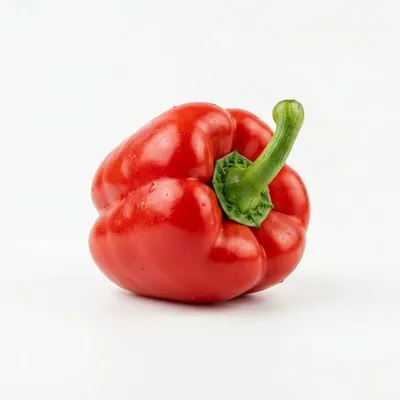
AI Scan of Calories in Bell Pepper

Bell pepper calories per 100g: 31 kcal

Nutrition facts for raw red bell pepper

31Calories
1gProtein
6gCarbs
0.3gFat

Bell Pepper Nutrition Analysis: The Ultimate Low-Calorie Crunch

The bell pepper (Capsicum annuum), technically classified as a fruit but culinarily treated as a vegetable, is a universally beloved ingredient in almost every major global cuisine. Known for its distinctively crisp, refreshing texture and satisfying crunch, it is one of the most incredibly nutrient-dense, low-calorie foods available on the planet. A standard 100-gram serving of raw, mixed bell peppers contains a remarkably low 31 calories. Because they consist of over 92% water, bell peppers offer a massive volume of physical food for an exceedingly small caloric footprint. This unparalleled volume-to-calorie ratio makes them a foundational staple for anyone pursuing aggressive weight loss, body recomposition, or simply attempting to increase their daily vegetable intake without accidentally overconsuming energy. To easily track your portions without a food scale, the CalMind photo calorie tracker helps you instantly scan your slices or diced peppers to log precise macros.

Understanding the Color Differences

One of the most fascinating aspects of bell peppers is their color variance. Green, yellow, orange, and red bell peppers are actually precisely the exact same plant, simply harvested at entirely different stages of their natural maturation process. Green bell peppers are harvested the earliest, while they are still fundamentally unripe. Because they are unripe, green peppers possess a distinctly sharper, slightly more bitter, and intensely "vegetal" flavor profile. They also contain the lowest amount of naturally occurring sugars, making them slightly lower in total carbohydrates and calories than their fully ripened counterparts.

If a green pepper is left on the vine to continue maturing, it will systematically transition into yellow, then orange, and ultimately a deep, vibrant red. As the pepper ripens, its complex chemical composition shifts dramatically. The natural starches strongly break down into highly palatable simple sugars (fructose and glucose), which is precisely why red bell peppers taste significantly sweeter and are often favored for eating raw in salads or dipping into hummus. While a red bell pepper might contain roughly 1 to 2 more grams of carbohydrates per 100g serving compared to a green one, this difference is biologically negligible for the vast majority of dietary approaches, including strict ketogenic protocols.

Macronutrients: Virtually Zero Fat and Protein

When you consume a 100-gram serving of raw bell pepper, you are primarily ingesting structured water and a handful of carbohydrates. The total carbohydrate count sits at roughly 6 grams. However, approximately 2.1 grams of those carbohydrates are purely indigestible dietary fiber. This exceptionally high fiber content means the net carbohydrates are incredibly low (roughly 3.9g). This structural fiber physically expands in your stomach, significantly promoting gastric distension, which sends powerful mechanical satiety signals directly to your brain, telling you that you are full.

Bell peppers contain virtually zero dietary fat (about 0.3g per 100g) and only a trace amount of protein (typically 1g). Because they lack these satiating, slower-digesting macronutrients, eating a bell pepper entirely by itself might not keep you full for long, despite the initial physical stomach stretch. For optimal blood sugar stabilization and prolonged satiety, it is always highly recommended to pair your bell pepper slices with a moderate source of healthy fats or protein, such as a tablespoon of high-quality guacamole, a slice of sharp cheddar cheese, or a serving of Greek yogurt-based ranch dip.

The Vitamin C Powerhouse

While citrus fruits famously take all the mainstream credit for Vitamin C, bell peppers are actually the true undisputed champions of this critical nutrient. A single 100-gram serving of raw red bell pepper provides an notable 128 milligrams of Vitamin C. This equates to over 140% of the Recommended Daily Allowance (RDA) for the average adult! Vitamin C is a highly potent, water-soluble antioxidant that plays a mandatory role in the biological synthesis of collagen (the primary structural protein in your skin, hair, nails, and joint cartilage). It is also absolutely vital for optimizing immune system function and dramatically increasing the physiological absorption of non-heme (plant-based) iron from other foods.

Note that Vitamin C is highly heat-sensitive. Strongly boiling, frying, or heavily roasting your bell peppers will significantly degrade their total Vitamin C content. To maximize your micronutrient intake, always try to consume your bell peppers raw, lightly steamed, or quickly stir-fried at a high heat for a very brief duration.

🔥 How to burn 31 Calories (100g serving)?

  • Run (6 mph pace): 3 minutes
  • Cycle (Moderate effort): 4 minutes
  • Walk (3.5 mph brisk pace): 7 minutes
  • Jumping rope: 2.5 minutes

Note: Caloric expenditure varies based on age, gender, and current body weight.

Cooking Methods and Caloric Surprises

Because raw bell peppers are so exceptionally low in calories, they are the perfect foundation for high-volume, "flexitarian" meals. However, their spongy, highly porous cellular structure means they act like absolute sponges when introduced to cooking oils or heavy fats. If you slice a whole large bell pepper (roughly 40 calories) and sauté it strongly in two tablespoons of standard olive oil (240 calories), the vegetable will quickly absorb almost all of the oil. Suddenly, your "diet-friendly" 40-calorie vegetable side dish has ballooned into a 280-calorie, highly calorie-dense serving. To prevent this, always utilize a non-stick cooking spray, a high-quality ceramic pan, or simply add a small splash of water or low-sodium chicken broth to the pan to briefly steam-sauté the peppers without adding hundreds of unwanted fat calories.

Bell Peppers and Eye Health

Beyond their impressive Vitamin C profile, red, orange, and yellow bell peppers are absolute nutritional powerhouses when it comes to long-term ocular health. Deeply pigmented bell peppers are incredibly rich sources of lutein and zeaxanthin, two highly specialized carotenoid antioxidants. The human body physically concentrates these specific antioxidants directly within the macula of the retina. Functioning almost like internal protective sunglasses, lutein and zeaxanthin actively filter out highly damaging, high-energy blue light wavelengths emitted by screens and the sun.

Clinical nutritional research has consistently demonstrated that a diet rich in these specific carotenoids can significantly reduce your statistical risk of developing both cataracts and age-related macular degeneration (AMD)—the two leading causes of irreversible vision loss in older adults. Furthermore, the massive dose of Vitamin C provided by bell peppers actively supports the intricate structural integrity of the delicate blood vessels supplying oxygen and nutrients directly to your eyes.

The Iron Absorption Synergy

While bell peppers themselves are not remarkably high in dietary iron, they are arguably the most important complementary vegetable for anyone struggling with iron deficiency anemia. The human body absorbs "non-heme" iron (the type of iron found exclusively in plant foods like spinach, lentils, and beans) very poorly compared to the "heme" iron found in red meat. However, when you chemically pair non-heme iron with a massive dose of Vitamin C, the absorption rate skyrockets.

The ascorbic acid (Vitamin C) in a bell pepper actively binds to the non-heme iron in the digestive tract, preventing it from forming strictly unabsorbable compounds and chemically keeping it in a highly bioavailable state. For individuals following a strict vegan or vegetarian diet, intentionally serving heavily diced red bell peppers alongside an iron-dense spinach salad or a hearty black bean chili is not just a flavor upgrade; it is a critical, scientifically verified metabolic strategy for maintaining optimal blood oxygenation and preventing chronic fatigue.

Bell Pepper Colors: Nutrition Comparison (Per 100g)

Color Calories Carbs Sugar Vitamin C
Green Bell Pepper 20 4.6g 2.4g 80mg
Yellow Bell Pepper 27 6.3g 4g 183mg
Red Bell Pepper 31 6g 4.2g 128mg

*Red peppers are fully ripe and have higher sugar and Vitamin C content.

Frequently Asked Questions

How many calories are in bell pepper per 100g?

Raw bell pepper has about 31 calories per 100g; green is often closer to 20 calories, yellow around 27, and red around 31.

Which bell pepper color has the most calories?

Red bell pepper is usually slightly higher because it is fully ripe and naturally sweeter.

Are bell peppers good for weight loss?

Yes. Bell peppers are low in calories, high in volume, and easy to add to meals without raising calories much.

Does cooking bell pepper increase calories?

The pepper itself stays low-calorie, but oil, cheese, sauces, or stuffing can raise the total quickly.

Snap a photo. See calories & macros.

Start with one photo. CalMind instantly shows calories and macros—so staying consistent feels easy.

Track this food