 CalMind
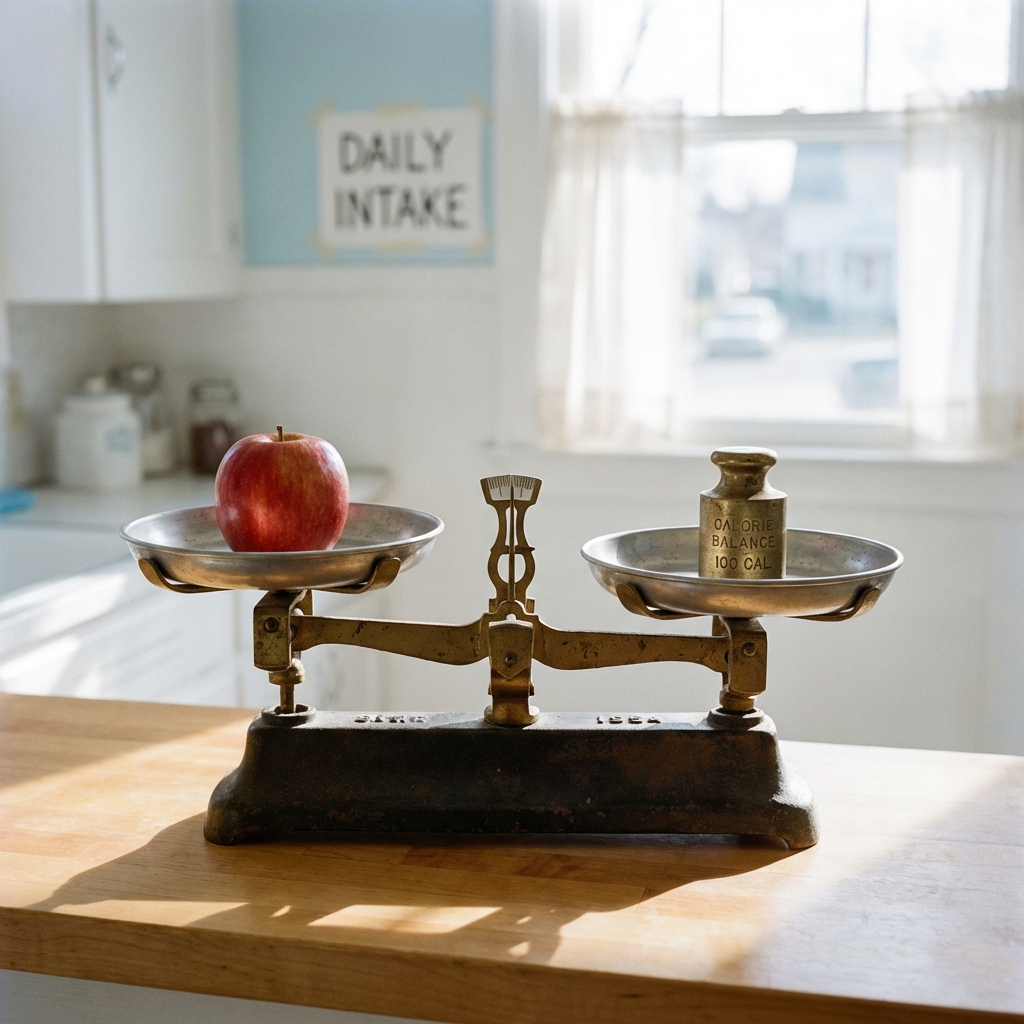
Calorie deficit estimates: how weight-loss math changes over time
Body weight changes when energy intake and expenditure remain out of balance over time. The response is not perfectly linear: body composition, appetite, activity, and energy expenditure can change as weight changes.
Dividing 3,500 by seven produces a 500-calorie daily arithmetic example, but it does not guarantee one pound of weekly loss. NIH researchers use a dynamic model because energy needs and the rate of change adapt over time.
How Your Body Burns Calories (TDEE)
Total daily energy expenditure includes resting energy expenditure, physical activity, and the thermic effect of food. Their percentages are not fixed for every person.
- Resting energy expenditure: energy used at rest.
- Non-exercise activity: daily movement such as walking and standing.
- Thermic effect of food: energy used to digest and process food.
- Planned exercise: intentional physical activity.
The relative contribution varies with body size, diet, work, training, and other individual factors.
The Step-by-Step Formula
- Estimate maintenance: treat a calculator result as a starting estimate, not a measurement.
- Choose a realistic time horizon: use the NIH Body Weight Planner for an adult dynamic estimate.
- Track consistently: compare estimated intake and activity with a multiweek weight trend.
- Reassess: seek professional guidance when the plan conflicts with medical needs, medication, pregnancy, breastfeeding, or eating-disorder risk.
Your Pocket Health Coach
Take your results to the next level. Download CalMind to scan meals, track macros, and reach your goals faster.
Download App FreeFrequently Asked Questions
Primary research, U.S. scope, and fact check
The dynamic-model discussion is based on NIH/NIDDK's Body Weight Planner research. The Mifflin–St Jeor paper is the original source for one commonly used resting-energy equation; prediction equations can still be wrong for an individual.
- NIH/NIDDK — research behind the Body Weight Planner
- Mifflin et al. — original resting-energy equation paper
- CDC — gradual weight-loss guidance
Applicable region: United States; adult general education. Last fact check: July 24, 2026. The NIDDK planner is not for people under 18 or those who are pregnant or breastfeeding and does not replace medical advice.
Editorial information
Written and edited by
Editor-in-Chief at CalMind. Leads editorial direction and English-language nutrition content.
Editorial disclosure added July 17, 2026. This page is not labeled as professionally reviewed unless a named reviewer and verifiable credential are shown.