 CalMind
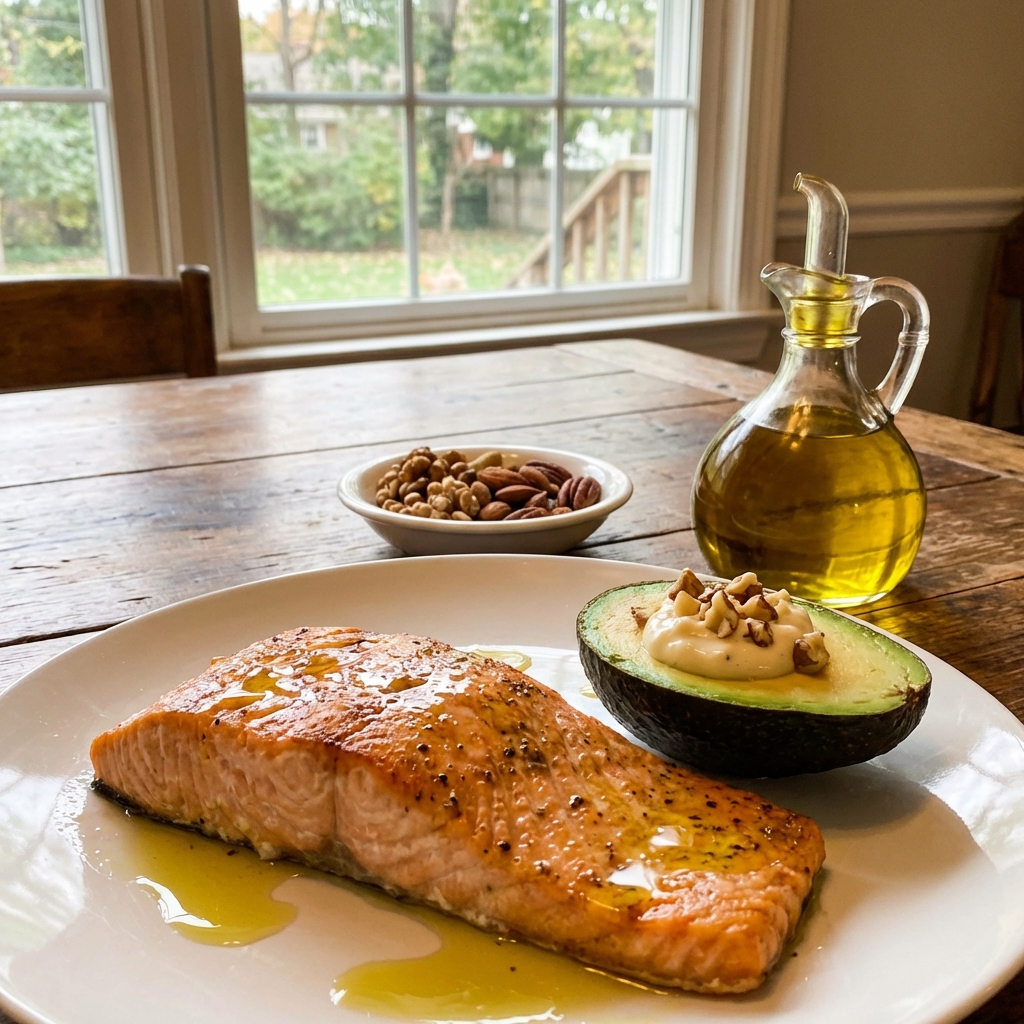
Keto diet macros: ranges, limits, and safety context
A ketogenic diet is a very-low-carbohydrate, high-fat dietary pattern intended to raise circulating ketones. The amount of carbohydrate that produces nutritional ketosis varies between people and should not be described as a guaranteed universal ratio.
A 2024 International Society of Sports Nutrition position stand describes fewer than 50 grams of carbohydrate per day as a broad guideline, while noting that many factors affect the response. A percentage split such as 70/25/5 is therefore an example, not a rule.
One common example—not a prescription
1. Fat
Fat supplies most energy in many ketogenic plans, but food quality and total energy intake still matter. Examples of unsaturated-fat and omega-3 sources include:
- Avocados and Avocado Oil
- Nuts (Macadamia, Walnuts, Pecans)
- Olive Oil and Coconut Oil
- Fatty Fish (Salmon, Mackerel)
2. Protein
Protein needs depend on body size, health, energy intake, and activity. Gluconeogenesis is a normal regulated process; this page does not set a universal upper protein limit or claim that one protein serving will end ketosis.
3. Carbohydrates
Fewer than 50 grams per day is a broad research guideline, not a guaranteed threshold. “Net carbs” is also not a standardized FDA Daily Value. Restriction can make it harder to obtain fiber and a varied dietary pattern, so food selection matters.
Medical and performance boundary
Evidence does not show that ketogenic diets are universally superior for exercise performance or body composition. People who use glucose-lowering medication, have diabetes, are pregnant or breastfeeding, have a history of eating disorders, or have kidney, liver, pancreatic, or lipid disorders should seek individualized clinical advice before major carbohydrate restriction.
Your Pocket Health Coach
Take your results to the next level. Download CalMind to scan meals, track macros, and reach your goals faster.
Download App FreeResearch sources, U.S. scope, and fact check
The macro range and performance statements above are bounded by the 2024 ISSN position stand. The NCBI clinical review supplies implementation and supervision context; neither source establishes 70/25/5 as a universal prescription.
- ISSN position stand: ketogenic diets (2024)
- NCBI Bookshelf — ketogenic diet clinical applications and implementation
Applicable region: U.S. English general education; cited research includes international evidence. Last fact check: July 24, 2026. This is not a therapeutic diet prescription or a substitute for medical care.
Editorial information
Written and edited by
Editor-in-Chief at CalMind. Leads editorial direction and English-language nutrition content.
Editorial disclosure added July 17, 2026. This page is not labeled as professionally reviewed unless a named reviewer and verifiable credential are shown.